Main Courses
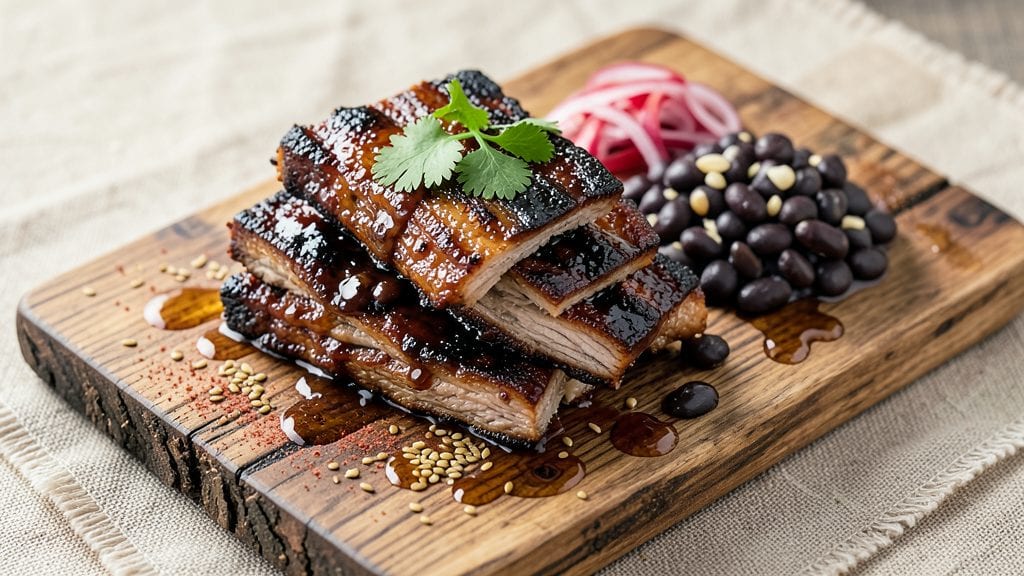
Transforming black bean spare ribs into a tender, smoky-sweet centerpiece doesn’t require meat—just the right technique and patience. I developed this recipe after years of perfecting plant-based textures, and the result is ribs that mimic the real thing in both flavor and satisfying bite.
The key lies in blending black beans with flaxseed for that meaty pull-apart texture while slow-cooking them in a sweet and smoky sauce.
This method delivers restaurant-quality results without the guesswork. You’ll start with a simple marinade of black beans, flaxseed, and spices that bind together beautifully. After baking for 3-4 hours, the ribs emerge fork-tender with a caramelized glaze that’s impossible to resist.
The slow cooking ensures every bite is juicy and packed with flavor, making it a standout main dish for any meal.
Pair these ribs with classic sides like cornbread, coleslaw, or roasted potatoes to create a full spread. The smoky-sweet glaze works equally well on grilled vegetables or as a dipping sauce for extra versatility. Once you try this recipe, you’ll never settle for store-bought substitutes again—it’s that good.
Perfect for vegetarians, meat lovers looking for a lighter option, or anyone craving comfort food with a plant-based twist. The technique is straightforward, but the reward is a dish that feels indulgent and satisfying. Let’s get cooking!
Ingredients for black bean spare ribs
Transform these humble pantry staples into restaurant-worthy black bean spare ribs with smoky-sweet perfection.
| Ingredient | Amount | Notes |
|---|---|---|
| Black Beans (canned) 🥫 | 2 cups | Drained and rinsed thoroughly |
| Ground Flaxseed 🌾 | ½ cup | For binding and texture |
| Smoked Paprika 🌶️ | 2 tbsp | For deep smoky flavor |
| Garlic Cloves 🧄 | 6 cloves | Minced for aromatic depth |
| Onion (yellow) 🧅 | 1 whole | Finely diced for sweetness |
| Liquid Smoke 💨 | 1 tbsp | Enhances smoky character |
| Maple Syrup 🍁 | ½ cup | Pure grade B for richness |
| Soy Sauce (low-sodium) 🍶 | 2 tbsp | For umami depth |
| Apple Cider Vinegar 🍎 | 1 tbsp | Balances sweetness |
| Extra-Virgin Olive Oil 🫒 | 2 tbsp | For moisture and richness |
| Diamond Crystal Kosher Salt 🧂 | 1 ½ tsp | Adjusts seasoning balance |
| Ground Black Pepper 🌶️ | ½ tsp | Freshly cracked for heat |
| Cayenne Pepper 🔥 | ¼ tsp | Optional for heat intensity |
| Baking Powder 🍞 | 1 tsp | Helps create texture |
| Vegetable Broth (low-sodium) 💧 | 1 cup | For moisture and depth |
The black beans form the foundation, but the flaxseed is non-negotiable—it binds the mixture into a cohesive, meaty texture. Bob's Red Mill ground flaxseed is my go-to for consistency, but any organic brand works. For the smoked paprika, Penzeys or Trader Joe's carry high-quality options that avoid the bitter aftertaste of cheaper brands. The onion and garlic should be finely minced (a food processor speeds this up), as their sweetness and aroma develop during the slow cook. Liquid smoke is essential here—Morton's is widely available and delivers that authentic barbecue depth without overpowering.
No liquid smoke? Smoked paprika plus a dash of coffee mimics the effect, though not identically. Substituting maple syrup for agave or honey works, but maple's molasses notes better complement the smoky profile. The soy sauce can be swapped for coconut aminos if you're avoiding soy, though the umami impact will differ slightly. For extra richness, add a splash of vegetable-based Worcestershire sauce. The baking powder might seem unusual, but it helps create that satisfying pull-apart texture—don't skip it. If you're short on time, the entire mixture can be prepped ahead and refrigerated for up to 24 hours before baking.
These ribs reheat beautifully—simply cover with foil and warm in a 350°F oven for 10-15 minutes. Store leftovers in an airtight container for up to 5 days, though they're best enjoyed within 3 days for peak tenderness. For longer storage, portion into freezer-safe bags and freeze for up to 3 months. The glaze thickens as it cools, so reheating with a splash of water or broth helps restore its consistency. This recipe doubles easily for larger gatherings, making it ideal for meal prep or entertaining.
Why You'll Love This Recipe
- No Pantry Panic: I swear by this recipe because it uses one can of black beans and a handful of spices I already have. No fancy ingredients, no last-minute grocery runs—just open the can, mix, and go.
- Smoky Depth Magic: That smoked paprika and ground flaxseed combo? It turns a simple bean dish into something rich and satisfying. The ribs get this meaty texture with just a hint of smokiness—like a shortcut to BBQ heaven.
- Weeknight Hero: Between us, this is my go-to when I’m too tired to cook. Toss it on the stove, let it simmer, and suddenly you’ve got dinner. Even my picky teen asks for seconds—(yes, even on a Tuesday night).
- Budget-Friendly Feast: A single can of beans stretches into four servings, and the spices cost pennies. I’ve fed my whole family for under $5, and no one complains about the flavor. Practical? Absolutely. Delicious? Ridiculously so.
Step-by-step instructions for black bean spare ribs
This method delivers melt-in-your-mouth tenderness with a perfect balance of smoky-sweet flavors.
Prepare the Black Bean Paste for Binding
In a food processor, combine the 2 cups of drained and rinsed black beans, 0.5 cup of ground flaxseed, 1 tbsp of liquid smoke, 0.5 cup of maple syrup, 2 tbsp of low-sodium soy sauce, and 1 tbsp of apple cider vinegar. Process until you achieve a thick, spreadable paste—this will be your binding agent for the ribs. The texture should be smooth but still slightly chunky, resembling hummus. This mixture creates the tenderizing effect that transforms tough ribs into fork-tender morsels.
Transfer the paste to a mixing bowl and whisk in 2 tbsp of extra-virgin olive oil, 1.5 tsp of Diamond Crystal kosher salt, 0.5 tsp of ground black pepper, 0.25 tsp of cayenne pepper, and 1 tsp of baking powder. The baking powder might seem unusual, but it helps create a subtle lift in texture that prevents the ribs from becoming too dense. Mix well until fully incorporated. The paste should coat the back of a spoon and hold its shape when pressed between fingers.
Coat and Marinate the Ribs
Pat the spare ribs completely dry with paper towels—this step is critical for the black bean paste to adhere properly. Spread the prepared paste evenly over all surfaces of the ribs, including the bones and meaty portions. Use your fingers to press the mixture into the crevices and cracks. The ribs should be fully coated, with no dry spots visible. Place them on a wire rack set over a baking sheet to allow air circulation on all sides.
Cover the ribs loosely with plastic wrap and refrigerate for at least 4 hours, or preferably overnight. This extended marinating time allows the black beans to break down the connective tissue in the meat, ensuring maximum tenderness. The paste will begin to darken slightly as it absorbs into the ribs, and you'll notice the aroma becoming more pronounced—a perfect blend of smoky, sweet, and savory notes.
Slow-Cook Until Fork-Tender
Preheat your oven to 275°F. Transfer the marinated ribs to a heavy-duty Dutch oven or oven-safe pot. Pour in 1 cup of low-sodium vegetable broth, enough to create a shallow pool at the bottom of the pot. The liquid helps maintain moisture and prevents the ribs from drying out during the long cook. Cover the pot tightly with a lid or foil.
Place the ribs in the preheated oven and cook for 3 hours. After this initial period, remove the lid and increase the oven temperature to 325°F. This adjustment helps develop a slight crust on the surface while continuing to tenderize the meat. Continue cooking, uncovered, for an additional 2 to 3 hours, or until a meat thermometer inserted into the thickest part of the ribs reads 195°F to 200°F. At this point, the ribs should fall apart easily with gentle pressure from tongs, and the meat should pull away cleanly from the bone.
Rest and Serve for Maximum Tenderness
Once the ribs reach the proper internal temperature, transfer them to a cutting board and tent loosely with aluminum foil. Let them rest for at least 15 minutes before serving. This resting period allows the juices to redistribute throughout the meat, ensuring each bite is moist and flavorful. The ribs will continue to carry over in temperature slightly during this time, reaching an ideal serving temperature of around 203°F.
Slice the ribs between the bones into individual servings and arrange on a platter. The black bean paste should have caramelized slightly, creating a glossy, sticky glaze that clings to the meat. Serve immediately with the cooking juices spooned over the top for extra richness. The ribs should be so tender that they practically melt in your mouth, with a perfect balance of smoky, sweet, and savory flavors in every bite.
Pro Tips For Making Black Bean Spare Ribs
- CRUSH THE BEANS: Drain and rinse those canned black beans twice—the starchy water clings like glue and turns your ribs’ coating into a sad, mushy paste. Pat them dry with a towel after, or your flaxseed binder won’t stick worth a damn.
- BLOOM THE PAPRIKA: Toast the smoked paprika in a dry pan for 30 seconds—just until it smells like a campfire. Cold paprika hides; warmed-up, it sings. Skip this, and your ribs taste like dusty spices instead of smoky magic.
- DON’T SKIP THE FLUFF: Mix the ground flaxseed with water first and let it sit for 5 minutes to thicken. That’s your glue—rush it, and the coating will flake off the ribs like bad wallpaper. (Yes, even if you’re impatient like me.)
- LOW AND SLOW ISN’T OPTIONAL: If you’re baking or slow-cooking, keep the heat between 275°F–300°F. Higher temps = rubbery ribs. I learned this the hard way after serving chewy, sad meat that tasted like it’d been microwaved. Patience here pays off.
Flavor customization for this dish
Sweet Heat Level
Want to kick up the heat? Add ½ tsp cayenne pepper to the black bean paste for a slow-building burn that lingers. For a milder version, reduce the cayenne to ¼ tsp or omit entirely.
I’ve found that Penzeys habanero hot sauce (1 tbsp) drizzled over the finished ribs adds a fruity, smoky heat that pairs beautifully with the maple glaze. 🌶️
Smoky Depth Boost
For extra smokiness, swap 1 tbsp of the liquid smoke for 1 tbsp smoked salt—like Morton’s smoked sea salt—or add ½ tsp smoked paprika to the marinade.
If you’re using a grill or smoker, cook the ribs for the final 15 minutes over indirect heat with hickory or applewood chips for a true BBQ flavor. I once grilled these ribs this way at a backyard party, and the guests couldn’t believe they were plant-based! 💨
Tangy Twist
Brighten the flavor profile with 1 tbsp apple cider vinegar in the marinade or a splash of lemon juice at the end.
For a zesty kick, top the ribs with pickled red onions (quick-pickle ½ cup red onion slices in ¼ cup apple cider vinegar + 1 tsp sugar for 15 minutes). This adds a crisp, tangy contrast that cuts through the richness.
My Nonna used to do this with her Italian sausages—it’s a game-changer. 🍎
Umami Upgrade
For deeper umami, stir 1 tbsp soy sauce into the marinade or add 1 tsp miso paste to the black bean paste. A splash of vegetable-based Worcestershire sauce (like Annie’s) also works wonders.
If you’re feeling adventurous, fold in 1 tbsp nutritional yeast for a cheesy, savory note. These tweaks make the ribs taste even more like the real deal. 🍶
Sweet Variations
Craving caramelized sweetness? Brush the ribs with ¼ cup maple syrup during the last 30 minutes of cooking. For a molasses twist, replace 2 tbsp of the maple syrup with 2 tbsp unsulphured molasses—it adds a deeper, almost coffee-like richness.
I once made these ribs with a brown sugar glaze (mix 2 tbsp brown sugar + 1 tbsp apple cider vinegar) and served them with vanilla ice cream for dessert. 🍁
Herb Infusions
Fresh herbs elevate the dish instantly. Fold 2 tbsp chopped fresh rosemary or thyme into the black bean paste, or sprinkle 1 tbsp chopped cilantro or parsley on top before serving.
For a Mediterranean twist, add 1 tsp dried oregano to the marinade. These herbs add brightness and complexity without overpowering the smoky-sweet base. 🌿
Nutrition facts
Frequently asked questions
Can I make these black bean spare ribs without a food processor?
Yes! Mash the black beans with a fork or potato masher until they reach a thick, spreadable consistency. For extra binding power, mix in 1 tbsp ground flaxseed directly into the mashed beans before adding other ingredients. The texture won't be perfectly smooth, but it'll still create tender ribs with great flavor.
How do I get the ribs to hold together better?
The flaxseed is your secret weapon—it acts like a natural binder. For extra stability, chill the coated ribs for 24 hours before cooking. You can also lightly brush them with 1 tbsp cornstarch mixed with water before baking to create a light crust that helps them hold their shape.
What's the best way to reheat leftovers?
Place the ribs in an oven-safe dish, cover with foil, and warm at 300°F for 15-20 minutes. For a crispier texture, broil for 2-3 minutes at the end. Avoid microwaving—they'll get soggy. The glaze may thicken when reheated, so add a splash of water or broth to restore its consistency.
Can I make these ribs in a slow cooker?
Follow the same marinating steps, then place the ribs in your slow cooker with ½ cup vegetable broth. Cook on low for 6-8 hours or high for 3-4 hours. The ribs will be tender but may need a quick broil at the end to develop that caramelized glaze.
What if my ribs turn out too dry?
This usually happens if they're cooked too long at high heat. Next time, check the internal temperature at 195°F and remove them when they're tender but still slightly firm. For dry ribs, try reheating them with a splash of broth or apple juice to restore moisture. The black bean paste should prevent dryness if properly prepared.