
Sauces & Condiments
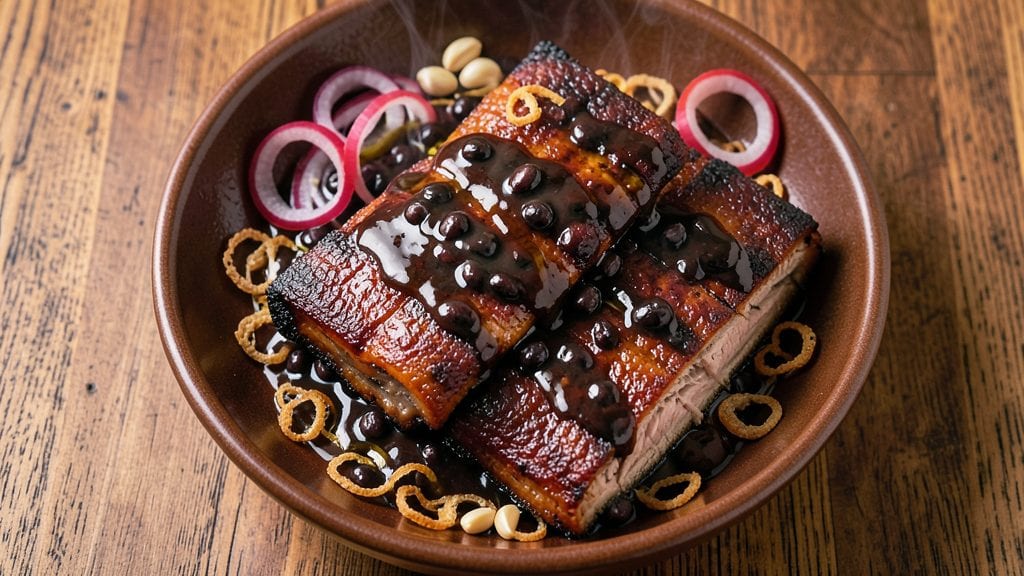
Mastering spareribs with black bean sauce transforms tough cuts into fall-off-the-bone tenderness with a smoky-sweet glaze that caramelizes beautifully. This recipe blends traditional braising techniques with a modern twist—using black beans to create a rich, velvety sauce that clings to every rib.
The key lies in patience: slow cooking breaks down collagen while the sauce reduces into a sticky, flavorful finish.
What sets this recipe apart is the black bean sauce, which balances earthy bean depth with smoky-sweet notes from molasses and liquid smoke. Unlike store-bought sauces, this version develops complexity through low-and-slow cooking, ensuring each bite delivers both texture and flavor.
The ribs emerge with a glossy, caramelized crust that contrasts perfectly with the tender meat beneath.
This method delivers restaurant-quality results without requiring specialized equipment—just a slow cooker or oven, and about 3 hours of hands-off time. The black bean sauce thickens naturally as it simmers, creating a sauce that’s rich yet balanced, not overly sweet.
It’s the kind of dish that elevates a weeknight dinner into a showstopper.
Serve with pickled vegetables or cornbread to complement the smoky-sweet flavors. The sauce also works as a versatile marinade or glaze for other proteins. Let’s get cooking—your ribs are about to become the star of the meal.
Ingredients for spareribs with black bean sauce
Four pounds of ribs and fifteen ingredients transform into restaurant-quality spareribs with velvety black bean sauce.
| Ingredient | Amount | Notes |
|---|---|---|
| Spareribs 🍖 | 4 lb | Bone-in, cut into individual ribs |
| Dried Black Beans 🌱 | 1 ½ cups | Soaked overnight or quick-soaked |
| Molasses 🍯 | ½ cup | Unsulphured, dark variety preferred |
| Liquid Smoke 🔥 | 1 tbsp | Pure, food-grade liquid smoke |
| Yellow Onion 🧅 | 1 whole | Diced, medium size |
| Garlic Cloves 🧄 | 6 cloves | Minced, fresh preferred |
| Apple Cider Vinegar 🍎 | ¼ cup | For tangy depth |
| Brown Sugar 🍚 | ½ cup | Light or dark, packed |
| Chicken Broth 💧 | 2 cups | Low-sodium preferred |
| Smoked Paprika 🌶️ | 2 tbsp | For authentic smokiness |
| Ground Cumin 🌿 | 1 tbsp | Toasted for enhanced flavor |
| Salt 🧂 | 1 ½ tbsp | Diamond Crystal preferred |
| Black Pepper 🌶️ | 1 tbsp | Freshly ground for heat |
| Honey 🍯 | 2 tbsp | Wildflower preferred |
| Cornstarch 🌾 | 1 tbsp | For sauce thickening |
The spareribs are the foundation—look for bone-in cuts with good marbling for maximum tenderness. Costco or local butcher shops often carry high-quality pork ribs at competitive prices. If using frozen ribs, thaw them overnight in the refrigerator; never microwave as it renders fat unevenly. The black beans should be dry, not canned, for optimal texture and flavor absorption during cooking. Great Northern or pinto beans work well, but black beans are essential for that deep, earthy base. For the molasses, unsulphured varieties ensure a cleaner flavor profile without off-notes. Liquid smoke is non-negotiable—Kikkoman or Wright's brands deliver consistent results without overpowering the dish.
No liquid smoke? Smoked paprika plus a pinch of cayenne mimics the smokiness, though it won’t replicate the depth. Substitute dried black beans with canned black beans, drained and rinsed, but reduce the cooking time by 30 minutes. For a sweeter profile, maple syrup can replace half the molasses, though molasses provides a more complex, caramelized finish. If you’re short on time, quick-soak the beans by boiling them for 2 minutes, then letting them sit off heat for an hour. The brown sugar can be swapped for white sugar, but it lacks the molasses-like depth. For a tangier sauce, balsamic vinegar works in place of apple cider vinegar, though it introduces a different acidity profile.
The sauce thickens as it simmers, so reduce it uncovered on medium-low heat for the last 15 minutes to achieve that glossy, caramelized finish. Store leftovers in an airtight container in the refrigerator for up to 5 days, though the ribs and sauce taste even better reheated. The sauce freezes beautifully for up to 3 months—portion it into ice cube trays for easy use as a marinade or glaze later. For best results, reheat gently in a saucepan over low heat, stirring occasionally to prevent scorching. The ribs can be prepped ahead and refrigerated overnight, making this a perfect make-ahead meal for gatherings.
Why You'll Love This Recipe
- One-Pot Magic: I swear by this recipe when I’m too tired to scrub a sink. The ribs and beans simmer together—no extra pans, no fuss—just deep, smoky flavor with that molasses caramel clinging to every bite.
- Smoky-Sweet Obsession: That liquid smoke and molasses combo? It’s like a slow-cooked hug for your taste buds. The black beans add this earthy richness that cuts through the richness of the ribs, making every forkful ridiculously satisfying.
- Tailgate or Tuesday: Between us, this dish works for everything. Pack it in a cooler for a football game, or serve it over rice for a lazy weeknight—same delicious result. (Yes, even on a Tuesday night.)
- Leftovers? Better: Honestly, I make a double batch because the sauce thickens beautifully the next day. Reheat it, and the ribs stay tender while the sauce gets even more concentrated—like a flavor upgrade you didn’t ask for.
Step-by-step instructions for spareribs with black bean sauce
Master the balance of smoky depth and sweet caramelization with these precise techniques.
Prepare the Spareribs for Maximum Flavor
Begin by trimming any excess fat from the 4 lb spareribs, leaving about ¼ inch of fat cap for moisture during cooking. Pat the ribs completely dry with paper towels—this ensures a proper sear and prevents steam from interfering with the caramelization. Place the ribs in a large bowl and combine the 1.5 tbsp salt, 1 tbsp black pepper, 2 tbsp smoked paprika, and 1 tbsp ground cumin. Rub this mixture evenly over all surfaces, pressing it into the meat so it adheres well.
Let the seasoned ribs sit at room temperature for 30 minutes before cooking. This step allows the spices to penetrate the meat and creates an even cooking temperature. Arrange the ribs bone-side down in a single layer on a wire rack set over a baking sheet. This positioning promotes even browning and prevents them from steaming in their own juices.
Build the Black Bean Sauce Foundation
While the ribs come to room temperature, prepare the black bean sauce by combining the 1.5 cups soaked dried black beans, 0.5 cup molasses, 0.25 cup apple cider vinegar, 0.5 cup brown sugar, 2 tbsp honey, 1 tbsp liquid smoke, and 2 cups chicken broth in a large saucepan. Bring this mixture to a boil over medium-high heat, then reduce the heat to medium-low and let it simmer uncovered for 20 minutes. Stir occasionally to prevent sticking and allow the flavors to meld.
After 20 minutes, use an immersion blender to purée the sauce until smooth. If you don't have an immersion blender, carefully transfer the mixture to a blender in batches, blending until completely smooth. Return the puréed sauce to the saucepan and continue simmering for another 10 minutes to thicken slightly. The sauce should coat the back of a spoon and have a rich, velvety consistency.
Sear and Slow-Cook the Spareribs
Preheat your oven to 275°F. Heat a large oven-safe skillet over medium-high heat and add the spareribs bone-side down. Sear for 5 minutes until deeply browned, then flip and sear the meaty side for another 3 minutes. Transfer the skillet to the preheated oven and pour the black bean sauce over the ribs, coating them completely. Cover the skillet tightly with foil and bake for 2 hours.
After 2 hours, remove the foil and increase the oven temperature to 375°F. Return the ribs to the oven uncovered for 15-20 minutes, or until the sauce has thickened and caramelized to a glossy sheen. The ribs should be tender enough to pull apart easily with tongs. During this final stage, the sauce will develop a beautiful dark glaze that clings to every surface of the meat.
Thicken and Glaze the Sauce
Remove the ribs from the oven and transfer them to a serving platter. Return the saucepan with the black bean sauce to the stovetop and place over medium heat. In a small bowl, whisk together the 1 tbsp cornstarch with 2 tablespoons of water to create a slurry. Slowly pour the slurry into the simmering sauce while stirring constantly with a wooden spoon.
Continue stirring until the sauce thickens to a glossy consistency, about 3-5 minutes. The sauce should coat the back of a spoon and have a syrupy texture that will cling beautifully to the ribs. Taste and adjust the seasoning with additional salt or black pepper if needed. Serve the spareribs immediately, generously drizzled with the thickened black bean sauce, accompanied by steamed vegetables or crusty bread.
Pro Tips For Making Spareribs With Black Bean Sauce
- Blanach Spareribs First: Drop those ribs in boiling water for 30 seconds before cooking—it loosens the skin so the molasses and liquid smoke penetrate deeper. I used to skip this and ended up with flavor stuck on the outside while the inside stayed bland.
- Soak Beans Overnight: Dried black beans need at least 8 hours soaking, not the 2-hour shortcut. Rinsed beans cook faster, but overnight soaking guarantees they’ll break down smooth in the sauce—no gritty surprises. (Yes, even if you’re impatient like me.)
- Caramelize Onions Low: Cook the onions slow and steady at 275°F (135°C) until deep brown, not crispy. Burnt onions turn bitter and overpower the molasses; patience here keeps the sauce balanced. I learned this after one disastrous batch where the sauce tasted like a campfire.
- Add Liquid Smoke Last: Stir in the liquid smoke just before serving—it’s volatile and burns off if heated too long. A splash at the end delivers that smoky aroma without turning the sauce acrid. (Your future self will notice the difference.)
Essential equipment for this dish
Slow Cooker Essentials
For hands-off cooking, a 6-quart slow cooker like the Hamilton Beach 66100 is perfect for this recipe. The deep pot accommodates the ribs and sauce comfortably while maintaining even heat distribution.
I always use the "low" setting for the first 2 hours to mimic the oven's gentle cooking—this ensures the ribs stay tender without drying out. 🌡️
Oven-Safe Skillet
A heavy-duty, oven-safe skillet is non-negotiable for searing and braising. I recommend a 12-inch Lodge cast iron skillet—its thick base retains heat evenly, and the pre-seasoned surface prevents sticking.
If you don’t have cast iron, a high-quality stainless steel skillet like All-Clad Stainless works well, but preheat it longer to avoid warping.
Immersion Blender
An immersion blender (like the Ninja CB101) is a game-changer for puréeing the black bean sauce directly in the pot. It saves cleanup and prevents scorching. If you lack one, a standard blender works, but blend in batches and avoid overfilling—liquid splatter is a mess!
I always reserve ½ cup of the sauce before blending to maintain proper consistency.
Wire Rack & Baking Sheet
To achieve that perfect caramelized crust, elevate the ribs on a wire rack placed over a baking sheet. This allows heat to circulate evenly, preventing steam buildup that would soften the edges.
A Viking brand wire rack fits most baking sheets and is dishwasher-safe for easy cleanup. Pro tip: Line the baking sheet with parchment paper to catch drippings.
Measuring Tools
Precision matters with this recipe, so invest in a digital kitchen scale (like the OXO Good Grips) for accurate measurements of molasses, brown sugar, and cornstarch. A fine-mesh strainer also helps remove any bean skins or impurities from the sauce before blending.
I keep a 2-cup liquid measuring cup handy for broth and vinegar—these ingredients need exact ratios for balance.
Tongs & Slotted Spoon
Long-handled tongs (like OXO Good Grips) are essential for flipping ribs during searing and serving. A slotted spoon helps skim excess fat from the sauce without losing flavor.
I also use a meat thermometer (like Thermoworks Smoke) to check internal temp—ribs are done at 195-203°F for maximum tenderness. 💡
Nutrition facts
Frequently asked questions
Can I use canned black beans instead of dried for this recipe?
Yes, but with adjustments! Drain and rinse 2 (15-oz) cans of black beans to remove excess sodium, then reduce the chicken broth to 1 cup to maintain sauce balance. The texture will be slightly softer, but the flavor stays rich. For best results, simmer the sauce 10 minutes longer to thicken properly.
How do I prevent the ribs from drying out during cooking?
Keep the ribs bone-side down for even heat distribution and never skip the 275°F low-and-slow stage—this breaks down collagen without overcooking. Cover tightly with foil during the first 2 hours to trap moisture, then uncover only for the final 15-20 minutes to caramelize the sauce. A meat thermometer ensures doneness at 195-203°F.
Can I make the black bean sauce ahead of time?
Prepare the sauce up to 3 days ahead and store it in an airtight container in the fridge. Reheat gently over low heat, stirring constantly to prevent scorching. For the ribs, season them and refrigerate overnight—they’ll develop deeper flavor. Cook as directed, adjusting the final glaze time by 5-10 minutes if using pre-made sauce.
What’s the best way to serve these spareribs?
Pair with pickled jalapeños or quick-pickled red onions to cut through the richness, and serve with cornbread or steamed greens. For a modern twist, add a side of cilantro-lime cauliflower rice. The smoky-sweet sauce also works as a marinade for grilled chicken or tofu—just reduce it by half first.
Why did my sauce turn out too thin?
This usually happens if you skipped the cornstarch slurry or didn’t simmer long enough. For a quick fix, mix 1 tbsp cornstarch with 1 tbsp water and stir into the hot sauce until thickened. If the sauce is still too thin, reduce it uncovered over medium-low heat for 5-10 minutes, stirring frequently. Avoid rushing—patience ensures that glossy, clingy finish!