
Side Dishes
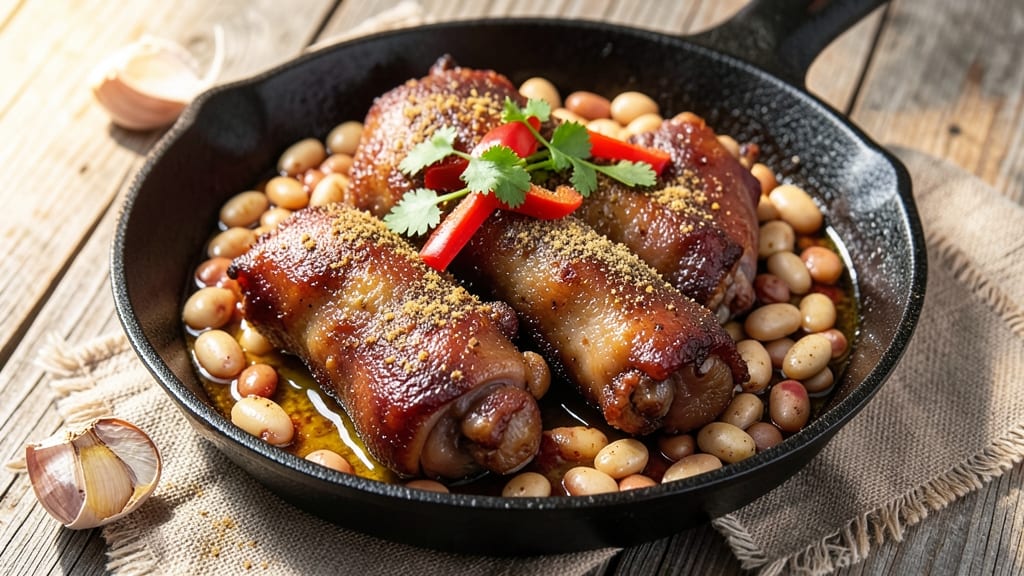
This Puerto Rican beans with pigs feet recipe delivers the hearty, slow-cooked comfort that defines island cuisine—where tender beans and gelatinous pork create a dish rich in tradition and flavor.
The pigs' feet, properly cleaned and simmered, infuse the beans with deep umami, while sofrito and annatto bring that signature Puerto Rican warmth. I've perfected this recipe over years of family gatherings, where it's always the centerpiece of Sunday meals.
The secret lies in the slow cooking—at least 6 hours—which transforms tough beans into creamy perfection while rendering the pigs' feet into melt-in-your-mouth bites. Traditional spices like cumin, oregano, and garlic build layers of flavor that make every spoonful unforgettable.
This isn't just a side; it's a celebration of Puerto Rican soul food, best served with rice, tostones, or a fresh mango salad to cut through the richness.
What you'll achieve is a pot of beans so tender they practically dissolve, with pigs' feet that fall apart at the touch—each bite a testament to patience and technique. The annatto stains the beans a beautiful golden hue, while the sofrito adds that unmistakable Caribbean depth.
This dish isn't just about eating; it's about connection, memory, and the kind of comfort that lingers long after the last bite.
Whether you're preparing for a family feast or simply craving a taste of home, this recipe delivers restaurant-quality results with a touch of island magic. The slow cooker makes it manageable, but the reward is a dish that tastes like love—just as it should.
Let's get started on creating this Puerto Rican classic.
Ingredients for puerto rican beans with pigs feet
The heart of Puerto Rican soul food—pigs' feet, beans, and spices slow-cooked into unforgettable richness.
| Ingredient | Amount | Notes |
|---|---|---|
| Pigs' Feet 🐖 | 4 lb | Fresh, cleaned thoroughly |
| Pinto Beans 🌾 | 2 cups | Dried, soaked overnight |
| Sofrito 🍅 | 2 cups | Homemade or quality jarred |
| Annatto Seeds 🌶️ | 1 tbsp | For vibrant color |
| Garlic Cloves 🧄 | 6 cloves | Freshly minced |
| Ground Cumin 🌿 | 1 tbsp | Toasted for depth |
| Dried Oregano 🌿 | 2 tsp | Mexican oregano preferred |
| Bay Leaves 🌿 | 2 whole | Fresh for optimal flavor |
| Salt 🧂 | 1 ½ tsp | Diamond Crystal preferred |
| Black Peppercorns 🌶️ | 1 tsp | Freshly cracked |
| Olive Oil 🫒 | ¼ cup | Extra-virgin for richness |
| Chicken Broth 💧 | 4 cups | Low-sodium preferred |
| Ham Hock 🥓 | 1 whole | Optional for extra depth |
| Onion 🧅 | 1 whole | Yellow, chopped |
Pigs' feet are the star here, so source them from a trusted butcher or specialty market like La Tienda or Hispanic grocery stores. Look for feet with minimal odor and firm, unblemished skin—a sign of freshness. The ham hock, while optional, adds layers of savory depth that elevate the dish, available at most Latin markets or the deli section of larger supermarkets. Pinto beans should be dried, not canned, for that authentic texture; Bob's Red Mill or Anthony's Goods are reliable brands. The annatto seeds, often sold in small bags at Latin markets, are non-negotiable for that signature golden hue and subtle earthy flavor—substituting with turmeric will alter the taste profile entirely.
No sofrito on hand? Blend equal parts tomato paste, bell pepper, onion, garlic, and cilantro for a quick substitute, though homemade lacks the complexity. Mexican oregano is a must—Italian oregano won't deliver the same depth. Fresh bay leaves can be swapped for dried at a 1:3 ratio, but fresh imparts a brighter aroma. The ham hock can be omitted entirely if unavailable, though the dish will lack some of its signature richness. For the pigs' feet, parboil for 15 minutes before adding to the pot to remove any lingering impurities, then pat dry thoroughly to prevent the broth from becoming cloudy.
This dish rewards patience—simmer for at least 6 hours, ideally 8, to achieve that gelatinous pigs' feet texture and creamy beans. Store in an airtight container in the refrigerator for up to 5 days, though the flavors deepen overnight. For longer storage, freeze portions in glass jars for up to 3 months. Reheat gently on the stove, adding a splash of broth if the beans thicken too much. The leftovers make an exceptional filling for tostones or rice bowls, extending the meal's value even further.
Why You'll Love This Recipe
- I’ll be real: pigs' feet are cheap, and a big batch stretches for days. The beans soak overnight (set it and forget it), and the leftovers? Even better the next day—like a slow-cooked secret weapon for lazy mornings.
- One-Pot Magic: Honestly, I love a recipe where I don’t have to juggle a million pans. The pigs' feet and beans simmer together—no chopping, no fuss—just a deep pot of flavor that builds as it cooks.
- Deep Umami Bomb: That crispy, caramelized edge on the pigs' feet? Chef’s kiss. The annatto seeds give it a golden hue, while the garlic and sofrito turn this into something dangerously addictive—like a hug in a bowl.
- Crowd-Pleaser Any Day: Between us, this is the dish that gets everyone at the table asking for seconds. It’s hearty enough for a Sunday family dinner but simple enough for a weeknight when you’re craving something rich and satisfying.
Step-by-step instructions for Puerto Rican beans with pigs feet
Master this slow-cooked classic where tender pigs' feet meet rich, gelatinous beans infused with Caribbean spices.
Prepare the Pigs' Feet for Maximum Tenderness
Begin by thoroughly cleaning the 4 lb pigs' feet under cold running water, scrubbing between the crevices with a stiff brush to remove any remaining hair or debris. This step is crucial—any residual grime will affect both flavor and texture. Once clean, place the feet in a large pot and cover with cold water by 2 inches. Bring to a boil over high heat, then immediately reduce to a gentle simmer for 2 hours. This initial boiling helps remove impurities and begins the tenderizing process.
After simmering, drain the water and rinse the feet again under cold water. Return them to the pot and add fresh cold water, this time covering them completely. Add 1 tbsp annatto seeds and 1.5 tsp salt to the water. Bring back to a boil, then reduce heat to maintain a low simmer for another 2 hours. The annatto will impart a beautiful golden hue while the salt penetrates the meat. The feet should now be fork-tender, with the skin beginning to separate slightly from the meat.
Build the Flavor Base with Sofrito and Aromatics
While the pigs' feet simmer, heat 0.25 cup olive oil in a large Dutch oven over medium heat. Add the chopped whole onion and cook for 5 minutes until softened and translucent. Add the 6 cloves minced garlic cloves and cook for another 30 seconds until fragrant—don't let them brown or they'll turn bitter. Stir in 2 cups sofrito, 1 tbsp ground cumin, 2 tsp dried oregano, and 2 whole bay leaves, cooking for 2 minutes to toast the spices and deepen their flavors.
Add the 2 cups soaked pinto beans (drained) and 4 cups chicken broth to the Dutch oven. Bring to a gentle boil, then reduce heat to maintain a low simmer. The mixture should bubble gently but steadily. If using the 1 whole ham hock, add it now—it will dissolve into the beans, adding depth of flavor. This step develops the foundational taste of the dish, where the spices meld with the sofrito and broth.
Combine and Slow-Cook for Gelatinous Perfection
Carefully transfer the tenderized pigs' feet to the Dutch oven with the bean mixture. Add 1 tsp freshly cracked black peppercorns and stir gently to combine. The pigs' feet should be fully submerged—if not, add a splash of water to cover them. Bring the mixture back to a simmer over low heat, then reduce to the lowest setting possible. Cover the pot with a tight-fitting lid and let it cook for 3 hours. This slow cooking is essential—it allows the collagen in the pigs' feet to break down into gelatin, creating that signature creamy, almost custard-like texture in the beans.
After 3 hours, check the beans for doneness. They should be fully tender, with the pigs' feet falling apart easily when prodded with a fork. If the mixture is too thick, add ½ cup water to loosen it. The beans should coat the back of a spoon with a thick, velvety consistency. If the feet aren't tender enough, continue cooking for another 30-60 minutes, covered, until they reach the desired texture.
Rest and Serve for Optimal Texture
Once the beans and pigs' feet are perfectly tender, remove the pot from heat and let the mixture rest, covered, for 15 minutes. This resting period allows the flavors to meld further and the gelatin to set slightly, ensuring each bite has that luxurious, almost jelly-like quality. Discard the bay leaves before serving, as they can be overly bitter if consumed.
Serve the beans hot, ladled over white rice or alongside tostones and mojo sauce. The pigs' feet can be served whole or shredded into the beans for an even more decadent experience. The dish should have a deep, smoky-sweet flavor from the annatto and sofrito, with a subtle heat from the cumin and oregano. Each spoonful should be rich, satisfying, and unmistakably Puerto Rican in character.
Pro Tips For Making Puerto Rican Beans With Pigs Feet
- Parboil Pigs’ Feet Twice: First boil them 15 minutes to loosen dirt, then drain and scrub under cold water—this removes grime without toughening the meat. I learned this the hard way after biting into a gritty bite. Rinse again before simmering, or the annatto will turn murky.
- Toast Annatto Seeds: Dry-toast the annatto seeds in a skillet for 30 seconds until fragrant—this unlocks their color and flavor. Skip this, and your beans will taste flat, no matter how long you simmer. (Yes, even if you’re impatient like me.)
- Simmer Beans Low and Long: After the initial boil, reduce to a gentle simmer—barely bubbles, like a lazy Sunday morning. High heat breaks down the beans into mush, and you want texture. Cover and walk away for 2+ hours.
- Brown Sofrito First: Sauté your sofrito in oil until it darkens slightly—this deepens the flavor base before adding anything else. I was skeptical until I tried it: the difference is night and day. (Pro tip: use olive oil, not vegetable.)
Dietary considerations for this puerto rican beans with pigs feet
Vegetarian Adaptation
Skip the pigs' feet entirely and replace them with 2 cups extra-firm tofu, pressed and cubed, or 1 lb smoked tempeh for a meaty texture. Add 1 tbsp liquid smoke to the sofrito for depth, and increase the annatto to 2 tbsp for richer color.
The beans will still develop that signature creamy texture, though without the gelatinous quality from collagen. 🌱
Gluten-Free Safety
This recipe is naturally gluten-free, but verify your ingredients: use certified gluten-free chicken broth (like Pacific Foods or Imagine brands) and check sofrito labels for hidden wheat.
The annatto seeds, cumin, and oregano are all gluten-free staples. For extra assurance, toast the cumin and oregano in a dry pan to eliminate any cross-contamination risk.
Low-Sodium Options
Reduce the salt to ½ tsp and use low-sodium chicken broth (like Swanson or Organic Basics). Boost flavor with 1 tbsp apple cider vinegar in the sofrito and ½ tsp smoked paprika instead of extra salt.
The annatto and cumin will still deliver that authentic Puerto Rican punch without excess sodium. 💡
Protein Boost
For a heartier dish, add 1 cup cooked quinoa or ½ cup black beans to the pot during the final 30 minutes of cooking. The extra protein balances the richness, while the black beans add a contrasting earthiness.
Alternatively, stir in ½ cup shredded rotisserie chicken after cooking for a quick protein upgrade.
Dairy-Free Considerations
This recipe is already dairy-free, but if serving alongside sides like rice or plantains, opt for coconut milk rice instead of traditional white rice. For extra richness, stir 2 tbsp coconut cream into the beans during the last 15 minutes of cooking. The coconut complements the annatto's earthy notes beautifully.
Allergen-Friendly Swaps
For nut allergies, avoid sofrito brands containing sesame or almonds—make your own with bell peppers, onions, garlic, and cilantro. If soy is a concern, replace tofu/tempeh with mushrooms (like shiitake) for umami depth.
Always check annatto seed packaging for soy cross-contamination warnings, as some brands process in shared facilities.
Nutrition facts
Frequently asked questions
Why do the pigs' feet need two separate boiling stages?
The first boil removes impurities and hair, while the second simmer with annatto and salt tenderizes the meat and infuses flavor. Skipping either step can leave the feet tough or bland. The annatto in the second stage also creates that signature golden color.
Can I use canned beans instead of dried for this recipe?
Canned beans won't give you the same creamy, gelatinous texture this dish requires. Dried beans break down more completely during the long slow cook, creating that signature velvety consistency. For a shortcut, use 2 cups cooked dried beans (from a separate pot) instead of canned.
What's the best way to store leftovers?
Store in an airtight container in the refrigerator for up to 5 days. For longer storage, freeze portions in glass jars for 3 months. Reheat gently on the stove with a splash of broth to maintain moisture. The flavors actually improve overnight!
Can I make this dish in an Instant Pot?
Yes! After the initial pigs' feet boiling, combine everything in the Instant Pot and cook on high pressure for 45 minutes, then natural release. The texture will be slightly different but still delicious. For extra tenderness, add 15 minutes of natural release time.
What if my pigs' feet smell strong even after cleaning?
This is normal—pigs' feet have a strong odor before cooking. The long simmering process removes the smell completely. If concerned, add 1 tbsp vinegar to the first boiling water to help neutralize odors. The final dish should have no trace of the initial smell.