
Side Dishes
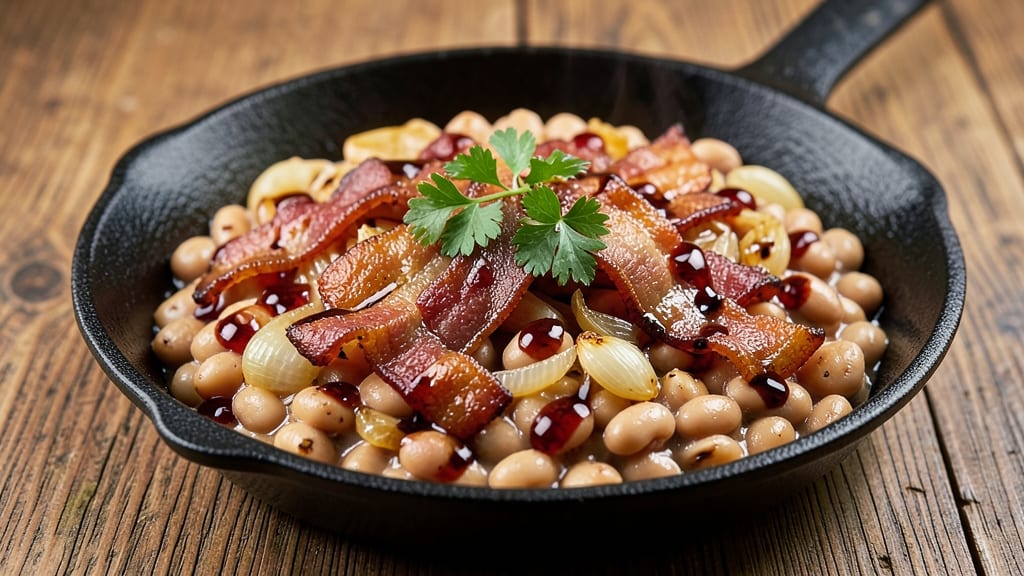
Transforming simple great northern beans into a smoky bacon-caramelized masterpiece only requires one pot and 30 minutes of hands-on time. The secret lies in layering flavors—crispy bacon, sweet molasses, and aromatic spices—while letting the beans simmer until tender and rich.
Standing on a step stool in my grandmother’s kitchen in Sicily, I learned how slow cooking transforms humble ingredients into something extraordinary, and this recipe carries that same magic.
This one-pot wonder delivers restaurant-quality results without the fuss. You’ll start with dried beans, but by the end, they’ll be perfectly tender with a glossy, caramelized coating that clings to every bite.
The bacon adds depth, the molasses brings natural sweetness, and a blend of spices ensures every spoonful is packed with flavor. It’s the kind of dish that makes weeknight dinners feel special—no shortcuts, just precise technique.
The best part? This recipe scales effortlessly, whether you’re feeding a family of four or a crowd for a holiday gathering. The beans develop a velvety texture while absorbing all the smoky, savory goodness, making them irresistible on their own or paired with grilled meats, cornbread, or crusty bread.
The aroma alone will have everyone at the table asking what’s for dinner before you even serve it.
Ready to elevate your side dishes? This foolproof method ensures tender beans every time, with a depth of flavor that turns a simple side into the star of the meal. Here’s everything you need to bring it to life in your own kitchen.
Ingredients for great" northern beans
Start with dried beans and end with restaurant-quality richness in one pot.
| Ingredient | Amount | Notes |
|---|---|---|
| Great Northern Beans 🌾 | 1 ½ cups | Dried, soaked overnight |
| Bacon 🥓 | 6 oz | Thick-cut, chopped into pieces |
| Molasses 🍯 | ¼ cup | Unsulphured preferred |
| Yellow Onion 🧅 | 1 whole | Diced, medium size |
| Garlic Cloves 🧄 | 4 cloves | Minced, fresh preferred |
| Apple Cider Vinegar 🍎 | 2 tbsp | For tangy brightness |
| Bay Leaves 🍃 | 2 whole | Dried, standard size |
| Ground Black Pepper 🌶️ | ½ tsp | Freshly cracked preferred |
| Ground Cumin 🌿 | 1 tsp | Toasted for depth |
| Salt 🧂 | 1 ½ tsp | Kosher or sea salt |
| Chicken Broth 💧 | 4 cups | Low-sodium preferred |
| Extra-Virgin Olive Oil 🫒 | 2 tbsp | For crisping bacon |
| Fresh Thyme 🌿 | 1 tbsp | Leaves only, chopped |
| Smoked Paprika 🌶️ | 1 tsp | For smoky depth |
Great Northern beans are the star here—dried, not canned, for that velvety texture. Soak them overnight (or quick-soak with boiling water) to ensure tender results. Bob's Red Mill or Great Northern Beans from the bulk section at Whole Foods are my go-tos—they stay fresh longer. The bacon? Thick-cut from the butcher counter (no pre-cooked slices) gives the best crisp, but regular bacon works in a pinch. Molasses adds that deep, caramelized sweetness—unsulphured is best if you want to avoid any off-flavors. Grab a small bottle from the baking aisle; it keeps for years.
No thick-cut bacon? Regular bacon chopped into small pieces still works—just cook it longer. Short on molasses? Maple syrup at half the amount gives a similar sweetness, though the flavor won’t be identical. Fresh thyme is ideal, but dried thyme at one-third the amount gets you close. The smoked paprika is key for that deep, smoky flavor—Penzeys or any bulk bin will have good quality. No smoked paprika? Regular paprika plus a pinch of liquid smoke (trust me on this). The onion and garlic are non-negotiable for flavor, but if you’re in a rush, onion powder and garlic powder work in a squeeze.
This dish tastes even better the next day—make extra if you can. Store in an airtight container in the fridge for up to 5 days, or freeze portions for 3 months. The beans thicken as they cool, so add a splash of broth when reheating. I always double the recipe for leftovers—perfect for lunches or potlucks. The bacon fat solidifies when chilled, so skim it off if you’re watching calories, or save it for cooking eggs later.
Why You'll Love This Recipe
- One-Pot Magic: I swear by this recipe because it’s literally one pot—no chopping chaos, no extra bowls. Just toss in the beans, onions, and bacon, let it simmer, and walk away.
- Molasses Magic: That deep, caramelized molasses cut through the smoky bacon like a dream. It’s not too sweet—just enough to make every bite feel like a little hug.
- Leftover Legend: This dish begs to be made in bulk. The flavors only get richer overnight, and it’s perfect for sandwiches, salads, or just reheating with a side of crusty bread.
- Budget Hero: Great Northern beans are cheap, bacon stretches far, and onions/garlic are pantry staples. I’ve fed my whole family (plus neighbors) for under $10—no exaggeration.
Step-by-step instructions for smoky bacon-caramelized one-pot beans
Here's how to create rich, smoky flavor in a single pot without missing a beat.
Render the Bacon and Build the Flavor Base
Heat a large, heavy-bottomed pot over medium heat and add the 2 tablespoons extra-virgin olive oil. Once shimmering, add the 6 oz chopped bacon and cook for 8-10 minutes, stirring occasionally, until the bacon is golden brown and crispy. This is where all the magic starts—the rendered fat will carry all those smoky flavors throughout the dish.
Using a slotted spoon, remove the bacon and set it aside on a paper towel-lined plate, leaving all the fat in the pot. This bacon fat is liquid gold for building flavor. If you're feeling impatient, you can crumble it slightly now, but I like to keep it in larger pieces for serving later. Keep the heat at medium—you want to avoid burning the fat, which would make the dish taste bitter.
Sauté Aromatics and Develop Depth
In the same pot with the bacon fat, add the 1 whole diced yellow onion and cook for 5-6 minutes until softened and translucent. You'll smell the onions caramelizing slightly—that sweetness will balance the smokiness later. Add the 4 minced garlic cloves and cook for 30 seconds until fragrant, stirring constantly to prevent burning.
Next, stir in the 1 teaspoon ground cumin and 1 teaspoon smoked paprika, letting them toast in the pot for 30 seconds until you can smell their warm, earthy aromas. This step is crucial—it builds the smoky backbone of the dish. Add the 1 tablespoon chopped fresh thyme and 2 whole bay leaves, stirring to combine. The thyme will add a bright herbal note that cuts through the richness.
Add Molasses and Vinegar for Caramelized Tang
Pour in the 0.25 cup molasses and 2 tablespoons apple cider vinegar, stirring constantly. The mixture will bubble and darken as it caramelizes—this is exactly what you want. Let it cook for 2-3 minutes until it thickens slightly and the raw vinegar smell disappears. This step creates the perfect balance of sweet and tangy that makes the dish so addictive.
Here's the thing—don't rush this part. If the mixture looks too thick, add 1-2 tablespoons of the chicken broth to loosen it. You want a glossy, syrupy consistency that will coat the beans beautifully. The molasses will give the beans a deep, caramelized richness that pairs perfectly with the smoky bacon.
Combine All Ingredients and Simmer
Add the 1.5 cups soaked great northern beans, 4 cups chicken broth, 1.5 teaspoons salt, and 0.5 teaspoon ground black pepper to the pot. Stir well to combine, making sure all the beans are coated in the flavorful liquid. Bring the mixture to a gentle boil, then reduce the heat to low and cover the pot. Let it simmer for 45-50 minutes, stirring occasionally to prevent sticking.
After about 30 minutes, check the beans for doneness by tasting one. They should be tender but still hold their shape—great northern beans break down more than some other varieties, so you want them just soft enough to be creamy but not mushy. If they're not quite there, add another ½ cup of water or broth and continue simmering. The beans will continue cooking as they rest, so don't worry about overcooking them now.
Finish and Serve with Crispy Bacon
Once the beans are tender, remove the 2 bay leaves and discard them. Return the reserved bacon to the pot and stir gently to warm through. Taste and adjust the seasoning—you might need a little more salt or vinegar to balance the flavors. The dish should be rich, smoky, and slightly sweet, with a tangy brightness from the vinegar and molasses.
Let the beans sit off the heat for 5 minutes before serving. This resting time allows the flavors to meld together perfectly. Serve warm, straight from the pot, with crusty bread to soak up all that delicious liquid. The contrast of the crispy bacon against the creamy beans is what makes this dish truly special. And don't forget to save some of that flavorful broth for another meal—it's even better the next day!
Pro Tips For Making Great" Northern Beans
- CRISP THE BACON FIRST: Cook the bacon until it’s deep brown and the fat renders fully—no pale, rubbery edges. That extra crispness adds flavor to the beans, and the rendered fat becomes your cooking liquid. (Yes, it’s worth the extra 3-4 minutes.)
- SOAK BEANS 8+ HOURS: I used to skip this and wonder why my beans stayed mealy. Great Northerns need a long soak—at least 8 hours, ideally overnight—to break down properly. Drain and rinse before cooking, or the molasses will taste bitter.
- CARAMELIZE ONIONS LOW AND SLOW: After cooking off the bacon, reduce heat to medium-low for the onions. Rushing this step turns them bitter; let them sweat for 15-20 minutes until deep golden, almost jammy. That’s where the sweetness comes from.
- SALT THE BEANS MID-COOK: Add half the salt when the beans first hit the pot, then the rest when they’re nearly tender. This keeps them from getting mushy and lets the molasses and bacon flavors shine. (Trust me, they’ll taste flatter if you salt all at once.)
Essential equipment for this recipe
Heavy-Bottomed Pot
I can’t stress enough how important this is—a 6-quart Dutch oven or enameled cast-iron pot is your best friend for this recipe. The thick base distributes heat evenly, preventing hot spots that can burn the beans or bacon.
My go-to is a Le Creuset signature round Dutch oven (it’s an investment, but it lasts forever), but any heavy pot will work. If you’re on a budget, a Lodge pre-seasoned cast iron does the job beautifully.
The key is avoiding thin, lightweight pots—they’ll cause uneven cooking and potentially scorch your molasses or vinegar. 🔥
Slotted Spoon
You’ll need this to remove the bacon without losing any of that precious fat. A long-handled, wide-mesh slotted spoon (like the OXO Good Grips) makes it easy to lift out crispy bacon pieces while leaving the rendered fat behind.
Pro tip: Use it to skim off any foam or impurities that rise to the surface during simmering. I keep one dedicated to my kitchen for tasks like this—it’s worth the small splurge for the convenience. The fat is where all the flavor lives, so don’t drain it!
Immersion Blender (Optional)
If you love a silky-smooth texture, an immersion blender (I use the Ninja CB100) lets you partially blend the beans at the end for a creamy consistency without losing the rustic charm.
Pulse just a few times—you don’t want to turn it into a puree—just enough to break up some of the beans for thickness. This step is optional but elevates the dish to restaurant-quality. For a more traditional texture, skip blending and let the beans stay whole.
Either way, the flavor will be incredible. 💫
Fine-Mesh Strainer
This comes in handy if you’re quick-soaking your beans (boiling them for 2 minutes, then draining and soaking for 1 hour). A stainless steel fine-mesh strainer (like the OXO Good Grips) makes draining the hot water easy and prevents the beans from slipping through.
I also use it to rinse the beans after soaking to remove any excess starch, which can make the beans gummy. Pro move: Rinse them under cold water while holding the strainer under the faucet—it’s faster than waiting for a colander to drain. ⏰
Wooden Spoon
This is my Nonna’s secret weapon—a heat-resistant wooden spoon (I’ve had mine for 20 years). It won’t scratch your pot like metal utensils and helps scrape up all those flavorful bits stuck to the bottom. The slightly rough texture also helps deglaze the pot better than silicone or plastic.
Avoid metal spoons here—they can react with the acidic vinegar and molasses over time. I keep one by my stove at all times, and it’s the only spoon I use for simmering sauces and soups. It’s become part of my kitchen’s soul. ✨
Instant-Read Thermometer
While not strictly necessary, an instant-read thermometer (like the Thermoworks ThermoPop) ensures your beans reach the perfect tenderness without overcooking. Great northern beans are done when they hit 85-90°F internal temperature—they’ll soften further as they rest.
This is especially useful if you’re short on time or cooking a large batch. I check the temperature after 45 minutes of simmering to gauge doneness. The thermometer also helps troubleshoot if your beans are taking too long—just add a splash of hot broth to speed things up. 🌡️
Nutrition facts
Frequently asked questions
Why should I soak dried great northern beans overnight instead of using canned?
Soaking dried beans overnight (or quick-soaking for 1 hour) transforms their texture—you’ll get that creamy, velvety consistency that canned beans can’t match. The long soak removes anti-nutrients and prevents digestive discomfort. Plus, dried beans absorb all the smoky bacon and molasses flavors better, creating a richer dish. Canned beans work in a pinch, but they’re pre-cooked and often mushy.
Can I make this recipe without molasses?
Swap the ¼ cup molasses for 2 tablespoons maple syrup plus 1 tablespoon brown sugar to mimic the caramelized sweetness. For a deeper flavor, try 1 tablespoon honey plus 1 teaspoon liquid smoke. The molasses adds a unique depth, but this combo still delivers great results. Just reduce the vinegar slightly if using sweeter substitutes.
How do I fix beans that are still crunchy after simmering?
If your beans aren’t tender after 50 minutes, add ½ cup hot broth and simmer uncovered for another 15-20 minutes. Stir occasionally to prevent sticking. For extra insurance, check your beans’ age—older dried beans take longer to soften. If they’re still tough, mash a few with a fork to release starch, which helps tenderize the rest.
Can I make this recipe in a slow cooker?
Yes! Brown the bacon and sauté aromatics in a skillet first, then transfer everything to a 6-quart slow cooker. Add the soaked beans, broth, and spices, then cook on LOW for 6-7 hours or HIGH for 3-4 hours. Stir occasionally to prevent sticking. The slow cooker’s gentle heat ensures perfectly tender beans with minimal effort.
What’s the best way to reheat leftovers?
Reheat gently in a pot over low heat with 2-3 tablespoons broth to restore moisture. Stir frequently to prevent scorching. For microwave reheating, cover with a damp paper towel and heat in 30-second intervals, stirring between each. Leftovers taste even better the next day—just add a splash of vinegar or broth to brighten the flavors.