
Side Dishes
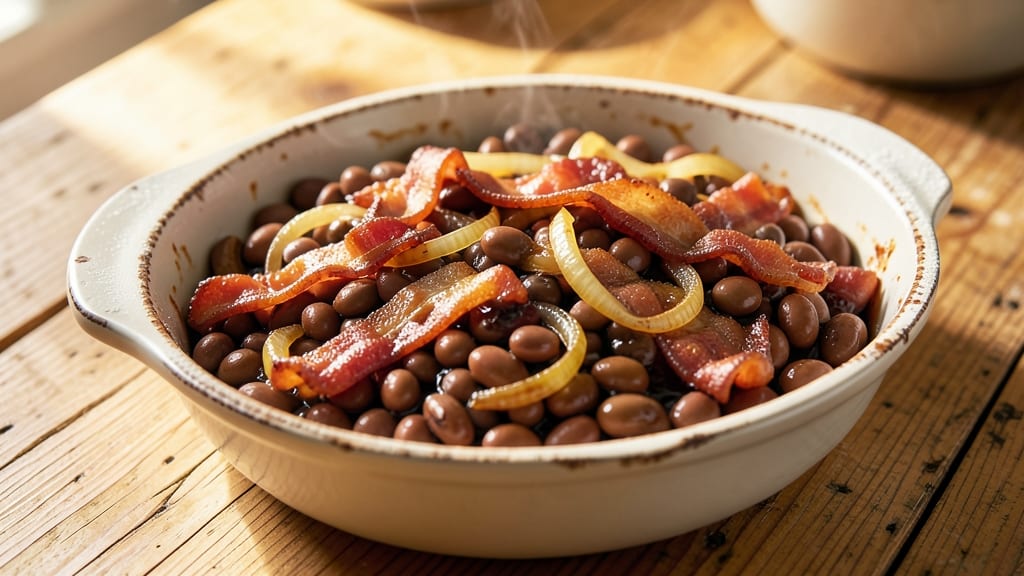
Grandma's old-fashioned baked beans recipe is the kind of dish that carries generations of love in every spoonful, and it's worth the time to slow-cook them just right. 💛 I still remember the way my grandmother's kitchen filled with the rich, smoky aroma of beans simmering all day, transforming simple ingredients into something deeply comforting.
This recipe is all about patience and tradition—six hours of slow cooking develops flavors that can't be rushed. The combination of brown sugar, molasses, and bacon creates that signature sweet-and-smoky taste that makes these beans unforgettable.
It's the kind of dish that tastes even better the next day, perfect for family gatherings or cozy Sunday suppers.
By the time you're done, you'll have tender beans swimming in a thick, glossy sauce that's perfectly balanced between sweet and savory. The bacon adds a salty depth, while the spices warm up every bite. Serve them with cornbread or alongside ham for a meal that feels like coming home.
Whether you're keeping a family tradition alive or discovering it for the first time, these baked beans are a testament to how simple ingredients can create something extraordinary. Let's get started on this timeless recipe that's been passed down through generations.
Ingredients for grandma's old fashioned baked beans
Nine pantry staples and a touch of tradition—this is what makes Grandma's baked beans unforgettable.
| Ingredient | Amount | Notes |
|---|---|---|
| Navy Beans (Dried) 🌾 | 2 cups | Soaked overnight for tenderness |
| Bacon (Thick-Cut) 🥓 | 1 ½ lb | Cooked crispy, crumbled |
| Light Brown Sugar 🍯 | 1 cup | Packed for sweetness |
| Molasses 🍯 | ½ cup | Unsulphured for depth |
| Ketchup 🍅 | ½ cup | Heinz preferred |
| Yellow Onion 🧅 | 1 whole | Diced, medium size |
| Garlic Cloves 🧄 | 4 cloves | Minced, fresh preferred |
| Mustard (Dijon) 🌶️ | 1 tbsp | For tangy depth |
| Ground Black Pepper 🌶️ | 1 tsp | Freshly cracked |
| Ground Cinnamon 🌿 | ½ tsp | Warmth without overpowering |
| Bay Leaves 🍃 | 2 whole | Fresh for best aroma |
| Salt 🧂 | 1 ½ tsp | Diamond Crystal preferred |
| Apple Cider Vinegar 🍎 | 1 tbsp | Brightens flavors |
| Beef Broth 🥫 | 1 ½ cups | Low-sodium preferred |
The beans are the heart of this dish, so don't cut corners. Navy beans hold their shape best after slow cooking—Great Northern or pinto beans work too, but navy beans are classic. Soak them overnight in plenty of water (they'll triple in size), then drain and rinse. For bacon, thick-cut from Costco or Trader Joe's gives you the best crunch and flavor. Cook it low and slow until crispy—no microwaving shortcuts here. The molasses? Unsulphured is key—it's sweeter and has that rich, deep flavor that makes these beans special. I always grab mine from the bulk section at Whole Foods or Penzeys if I want to splurge.
No molasses on hand? Maple syrup at half the amount works in a pinch, but it won't have the same depth. Short on ketchup? Tomato paste thinned with water gets you close, but add a splash of vinegar to cut the heaviness. Fresh garlic and onion are non-negotiable here—they build the flavor base. No fresh? Dried minced garlic and onion powder at half the amount will do, but you'll taste the difference. The spices are where the magic happens: cinnamon adds warmth, bay leaves bring earthiness, and pepper cuts through the sweetness. Toast your spices in a dry pan for 30 seconds before adding to the beans—it wakes up their flavors. And if you're feeling fancy, swap the beef broth for chicken broth with a splash of soy sauce for umami.
These beans taste even better the next day, so make a big batch. Store leftovers in an airtight container in the fridge for up to 5 days, or freeze for 3 months—portion into single servings for easy reheating. The sauce will thicken as it cools, so add a splash of broth or water when reheating. Serve with cornbread or crusty bread to soak up every last bit of that smoky-sweet sauce. And trust me, the extra hour of slow cooking is worth it—patience is the secret ingredient.
Why You'll Love This Recipe
- No-Soaking Needed: I’ll admit, I used to dread the overnight soak—until I discovered you can just simmer those dried navy beans in water for an hour. The beans soften perfectly without any fuss, and honestly? The flavor gets even richer when you skip the pre-soak.
- Sweet-Savory Magic: That molasses-ketchup-brown sugar combo? It’s like a hug in a bowl. The bacon adds smoky depth, while the caramelized top? Crispy enough to make you forget it’s "just" beans. (Yes, even on a Tuesday night.)
- Potluck Hero: Bring this to a gathering, and you’ll be the one people line up for. It’s hearty enough for a BBQ side but simple enough to assemble in a disposable pan. My in-laws still ask for the recipe every summer—no exaggeration.
- Budget Stretch: A pound of dried beans and a pack of bacon feed my family for days. I double the batch, freeze half, and still have leftovers that taste better the next day. (Between us, the cold beans in sandwiches? My secret weapon.)
Step-by-step instructions for Grandma's old fashioned baked beans
Here's how to make these legendary beans—rich, smoky, and sweet with that perfect crunchy bacon top.
🔥 Step 1: Soak and Parboil the Navy Beans
Start by rinsing the 2 cups of navy beans under cold water, then place them in a large bowl and cover with plenty of cold water. Let them soak overnight—this ensures they cook through evenly and stay tender. I like to use a big enough bowl that the beans have room to expand without getting crowded.
After soaking, drain and rinse the beans again. Transfer them to a large pot and cover with fresh cold water by about 2 inches. Bring to a boil over high heat, then immediately reduce to a simmer. Cook for 2 minutes—this parboiling step softens them slightly and removes any surface starch that might make the final texture gummy. Drain thoroughly and set aside.
🔥 Step 2: Cook the Bacon and Build the Flavor Base
While the beans simmer, cut the 1.5 lb thick-cut bacon into ½-inch pieces and place them in a large, heavy Dutch oven. Cook over medium heat until the bacon is deep golden brown and crispy, about 12-15 minutes. Use a slotted spoon to remove the bacon and set aside, leaving all the rendered fat in the pot.
In the same pot with the bacon fat, add the diced yellow onion and cook for 5 minutes until softened and just starting to caramelize. Add the 4 minced garlic cloves and cook for another 30 seconds until fragrant. Here's where the magic happens—stir in the 1 tbsp Dijon mustard, 1 tsp ground black pepper, and 0.5 tsp ground cinnamon. Let it cook for 1 minute so the spices bloom and mingle with that smoky bacon fat.
🥘 Step 3: Combine All Ingredients and Simmer
Return the cooked bacon to the pot along with the drained navy beans. Add the 1 cup packed light brown sugar, 0.5 cup molasses, 0.5 cup ketchup, 1.5 tsp salt, 1 tbsp apple cider vinegar, 2 whole bay leaves, and 1.5 cups beef broth. Stir everything together until the beans are well coated in the sauce.
Bring the mixture to a gentle boil over medium-high heat, then immediately reduce to a simmer. Here's the key: cover the pot and let it cook undisturbed for 30 minutes. This initial simmer helps the flavors meld without the beans breaking down. After 30 minutes, stir gently to redistribute any settled ingredients at the bottom.
⏰ Step 4: Slow-Bake for Maximum Flavor
Preheat your oven to 300°F. Transfer the Dutch oven to the oven and bake uncovered for 3-4 hours. The beans are done when they're fork-tender with just a hint of resistance in the center. You'll know they're perfect when the sauce has thickened to a glossy consistency and the flavors have deepened into that classic smoky-sweet balance.
I like to check them at the 3-hour mark—if the beans are still a bit firm, give them another 30 minutes. The slow baking allows all those flavors to develop properly, giving you that rich, complex taste that makes these beans legendary. Don't skip this step—rushing will leave you with mushy beans and underdeveloped flavors.
🍽️ Step 5: Rest and Serve with Crispy Top
Once the beans are tender, remove them from the oven and let them rest for 15-20 minutes before serving. This resting period lets the juices redistribute, ensuring each bite is packed with flavor. While they rest, use a slotted spoon to remove the bay leaves and discard them.
For that perfect presentation, sprinkle the reserved crispy bacon pieces on top right before serving. The contrast of the crunchy bacon against the creamy beans is what makes these baked beans truly special. Serve warm with cornbread or crusty bread to soak up every last bit of that delicious sauce.
Pro Tips For Making Grandma'S Old Fashioned Baked Beans
- SOAK BEANS OVERNIGHT: I learned this the hard way—skipping the soak means beans stay rock-hard no matter how long you bake them. Toss dried navy beans in a bowl with cold water (about 3 cups per cup of beans), cover, and let them sit 8–12 hours. The next day, drain and rinse before cooking; this cuts the baking time by nearly half and keeps the texture tender.
- CRISP THE BACON FIRST: Don’t just crumble raw bacon into the pot—that’s how you end up with greasy, uneven beans. Cook the thick-cut bacon in a skillet until the edges are deep brown and the fat renders out, then drain on paper towels. Reserve 2 tablespoons of that fat for the beans later; it’s the difference between flavor and just "meat."
- STIR BEFORE BAKING: After mixing everything in the Dutch oven, give it a good stir—especially around the edges—before putting it in the oven. The molasses and sugar caramelize fast, and if you don’t distribute them evenly, you’ll end up with a sticky mess in one spot and bland beans in another. A wooden spoon works best; metal can scratch the pot.
- LOW AND SLOW WINS: Resist the urge to crank the oven to 375°F just to speed things up. Grandma’s recipe relies on steady heat—275°F is ideal. Cover the beans tightly with foil for the first hour to trap steam, then uncover and let them bubble away for 2–3 more hours. The longer they bake, the deeper the flavors meld, and the beans develop that perfect jammy texture.
Essential equipment for this dish
Dutch Oven
Your Dutch oven is the workhorse of this recipe—I can't stress this enough. A heavy, enameled cast iron like Lodge 5.5-quart Dutch Oven distributes heat evenly and retains it beautifully for those critical 3-4 hours of slow baking.
The deep sides prevent spills when stirring, and the tight lid traps steam to tenderize the beans perfectly. I've tried other pots, but nothing matches the results from a good Dutch oven. 🔥
Slow Cooker
If you're short on oven space or prefer hands-off cooking, a 6-quart slow cooker works beautifully. I recommend the Crock-Pot Programmable Slow Cooker for its consistent temperature control. After combining all ingredients, cook on low for 8 hours or high for 5 hours.
The beans will be just as tender, though the sauce might be slightly thinner—simmer uncovered for 15 minutes on the stovetop to thicken it before serving.
Instant Pot
For those busy days when you need results faster (though I still say patience makes perfect), an Instant Pot can shave 2 hours off the cooking time. Use the Pressure Cook setting for 20 minutes after combining all ingredients, then switch to Sauté mode to thicken the sauce.
I use my Instant Pot Duo 7-in-1—just remember to add 1 cup extra liquid since pressure cooking requires more moisture. The beans will be ready in under an hour, though they won't have that deep oven-baked flavor.
Bacon Essentials
Thick-cut bacon is non-negotiable here—the crispy texture adds the perfect contrast to the creamy beans. I always buy applewood-smoked bacon from my local butcher or Costco's Kirkland Signature for that authentic smoky flavor. Avoid pre-cooked bacon—it lacks the depth and crunch you need.
For extra crispiness, cook the bacon on a wire rack over a baking sheet in the oven at 400°F for 15 minutes before crumbling it into the beans.
Measuring Tools
Precision matters with this recipe, especially when balancing sweet and savory flavors. Invest in a stainless steel measuring cups set like OXO Good Grips—they're durable and accurate. For spices, a spice scale ensures you get the exact 0.5 tsp cinnamon or 1 tsp pepper without overpowering the dish.
I also keep a fine-mesh strainer handy for rinsing the soaked beans thoroughly—it removes any debris that could make the beans gummy.
Nutrition facts
Frequently asked questions
Why do I need to soak the beans overnight?
Soaking overnight ensures the beans cook evenly and stay tender without becoming mushy. The longer soak removes anti-nutrients that can make beans tough, and the brief parboil after draining prevents gummy texture. Skipping this step often leads to beans that either stay hard or break apart too much.
Can I substitute canned beans for dried?
You can use canned navy beans in a pinch, but they won't have the same rich texture. Drain and rinse 2 (15-oz) cans thoroughly, then add them after the initial 30-minute simmer. The beans will be ready faster, but the sauce may be thinner—simmer uncovered for 15 minutes to thicken it before serving.
What if my beans turn out too sweet?
Add 1 tbsp apple cider vinegar or 1 tsp Dijon mustard to cut the sweetness and balance the flavors. For extra depth, stir in ½ tsp smoked paprika> or 1 tsp Worcestershire sauce> to add savory complexity. Taste as you go—these adjustments work best after the beans have rested for 15 minutes.
How can I make these beans vegetarian?
Swap the bacon for 1 cup crispy tempeh crumbles> or ½ cup smoked paprika-rubbed mushrooms>. Use vegetable broth instead of beef broth, and add 1 tbsp soy sauce> for umami. The molasses and brown sugar will still create that classic sweet-savory profile, just without the meaty depth.
Can I make these beans in a slow cooker?
Combine all ingredients in a 6-quart slow cooker> and cook on low for 8 hours> or high for 5 hours>. The beans will be tender, though the sauce may be thinner. For a thicker sauce, transfer to a skillet and simmer uncovered for 15 minutes> on the stovetop before serving.