
Sauces & Condiments
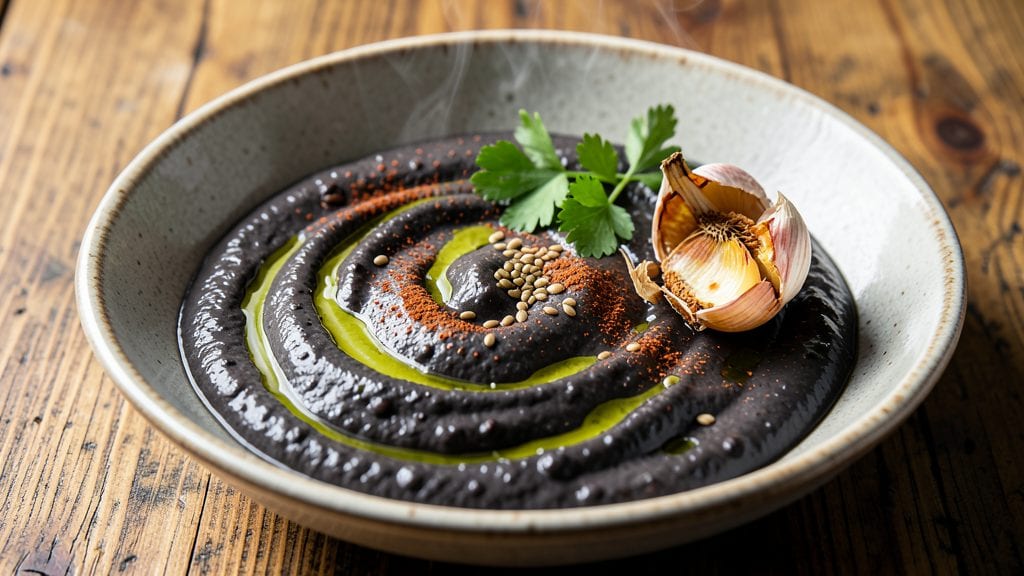
This black bean humus recipe transforms humble pantry staples into a smoky-spiced, velvety dip that rivals traditional chickpea versions—without the fuss. 💫 The secret lies in blending cooked black beans with tahini and roasted garlic until silky smooth, then finishing with a touch of smoked paprika and lemon for brightness.
I developed this after realizing how often black beans get overlooked in hummus recipes, yet they deliver a deeper, earthier flavor that pairs perfectly with crunchy toppings.
The beauty of this recipe is its versatility—it works as a dip for veggies, a spread for sandwiches, or even a topping for tacos. Unlike traditional hummus, the black beans add natural sweetness that balances the tahini’s richness, while the smoky spices give it a restaurant-quality depth.
The texture is creamy yet light, thanks to a precise blending technique that avoids grittiness while keeping it thick enough to stay on chips.
What makes this recipe stand out is how it elevates simple ingredients into something extraordinary. The smoky paprika and cumin create warmth, while the lemon juice cuts through the richness, ensuring every bite is bold yet balanced.
Whether you're hosting a game day or just craving a satisfying snack, this humus delivers flavor without the guilt—plus, it keeps beautifully in the fridge for up to five days.
Ready to make it? The process is straightforward: cook the beans, blend with tahini and spices, then adjust the consistency with water or lemon juice. Top with toasted seeds or fresh herbs for extra crunch and color. Here’s everything you need to create this foolproof, crowd-pleasing dip.
Ingredients for black bean humus
Nine simple ingredients transform into a restaurant-worthy black bean humus with smoky depth and velvety texture.
| Ingredient | Amount | Notes |
|---|---|---|
| Cooked Black Beans 🫘 | 1 ½ cups | Drained and rinsed well |
| Tahini 🥜 | ½ cup | Sesame paste, high quality |
| Roasted Garlic Cloves 🧄 | 3 whole | Charred and peeled |
| Extra-Virgin Olive Oil 🫒 | ¼ cup | For creaminess and richness |
| Smoked Paprika 🌶️ | 1 tbsp | For deep smoky flavor |
| Ground Cumin 🌿 | ½ tsp | Toasted for warmth |
| Lemon Juice 🍋 | 2 tbsp | Freshly squeezed |
| Sea Salt 🧂 | ½ tsp | Adjust to taste |
| Toasted Sesame Seeds 🌾 | 2 tbsp | For crunchy topping |
| Fresh Cilantro Leaves 🌿 | ¼ cup | Chopped, for garnish |
The black beans are the foundation—canned Goya or Bush’s work perfectly, but if you’ve got dried, soak them overnight for the best texture. Tahini is non-negotiable here; Kirkland Signature or Whole Foods 365 are budget-friendly options that don’t compromise on flavor. Roast your garlic until charred (wrap in foil, bake at 400°F for 15 minutes)—this adds a sweet, caramelized depth that store-bought minced garlic can’t match. The smoked paprika should be Spanish or Hungarian for that authentic smokiness; Penzeys or the bulk section at Trader Joe’s are great sources.
No tahini? Substitute with 3 tbsp peanut butter plus 1 tbsp olive oil, though the flavor will shift slightly. Short on smoked paprika? Liquid smoke at 1/4 tsp works in a pinch, but it’s not ideal. The sesame seeds can be swapped for pumpkin seeds or sunflower seeds if you’re avoiding sesame. Fresh cilantro is best, but dried cilantro powder at 1/4 tsp is a decent backup. For extra creaminess, add 1-2 tbsp aquafaba (chickpea brine) instead of water when thinning. The lemon juice is key—always use fresh, as bottled won’t brighten the flavors the same way.
Store the humus in an airtight container with a thin layer of olive oil on top to preserve freshness. Keeps for 5-7 days in the fridge, though the flavor peaks within the first 2 days. For longer storage, freeze in ice cube trays—thaw overnight in the fridge before serving. The toasted seeds and herbs should be added fresh just before serving to maintain their crunch and aroma. Double the batch; this humus disappears faster than you’d expect!
Why You'll Love This Recipe
- No Blender Hassle: I’ll be real—this hummus doesn’t need a food processor. Mash those black beans with a fork, stir in the tahini and roasted garlic, and you’re done. That smoky paprika? Just a sprinkle. Five minutes, tops.
- Creamy-Smoky Magic: The tahini gives it that rich, nutty depth, while the roasted garlic cloves melt into something almost buttery. Add a swirl of olive oil, and that smoked paprika? It turns every bite into a little flavor explosion—like a cozy campfire in your mouth.
- Game for Any Spread: Slather it on toast, dip veggies, or smear it on sandwiches—it’s the ultimate neutral canvas. (Yes, even on a Tuesday night.) Honestly, I’ve used it as a taco sauce base, a pasta drizzle, and even a quick soup thickener. It’s the one thing I always keep on hand.
- Pantry Hero: Black beans and tahini? Both last forever. A batch makes enough for snacks, appetizers, and leftovers that taste just as good three days later. Between us, this is the kind of recipe that saves me money and stress—no last-minute grocery runs needed.
Step-by-step instructions for black bean humus
Here's the method for creating a rich, smoky humus with perfect texture and balanced flavors.
👨🍳 Step 1: Combine the Base Ingredients
In a food processor fitted with the metal blade, add the 1.5 cups cooked black beans. I always drain and rinse them first to remove any excess starch that could make the humus gummy. Add the 0.5 cup tahini next—this sesame paste is what creates that signature creamy texture, so don't skip it.
Pulse the mixture for 10-15 seconds until you see small chunks forming. This breaks down the beans slightly without over-processing. The tahini will look stringy at first, but it'll blend smoothly once we add more ingredients. Here's the thing—if you add all the liquid at once, you'll end up with a watery humus. We're building this in stages to control the consistency.
🍳 Step 2: Add Aromatics and Spices
Add the 3 whole roasted garlic cloves (peeled), 0.25 cup extra-virgin olive oil, and 1 tbsp smoked paprika to the food processor. The roasted garlic adds deep, caramelized sweetness that balances the smokiness of the paprika. Pulse again for 20-30 seconds until everything starts to come together but still has some texture.
Now add the 0.5 tsp ground cumin and 0.5 tsp sea salt. The cumin brings warm earthiness while the salt enhances all the flavors. With the processor running, slowly drizzle in the 2 tbsp lemon juice. This acidity brightens the humus and prevents it from tasting too heavy. You'll notice the mixture becomes smoother as it incorporates—this is when the humus starts taking shape.
🥘 Step 3: Process Until Silky Smooth
With the processor running continuously, scrape down the sides of the bowl to ensure everything gets incorporated. Process for 1-2 minutes until the humus is completely smooth with no visible bean chunks. You're looking for a thick, spreadable consistency—not too thick that it's stiff, but not too thin that it's soupy.
Taste and adjust seasoning if needed. I usually add a pinch more salt or a splash more lemon juice at this stage. The humus should be rich but not overpowering, with a perfect balance of smoky, garlicky, and slightly tangy flavors. If it's too thick, add 1-2 teaspoons of water at a time until it reaches your desired consistency. This is where patience pays off—don't rush this step or you'll compromise the texture.
🔪 Step 4: Finish and Garnish
Transfer the humus to a serving bowl. Using a rubber spatula, press it down gently to create a smooth surface. This helps it hold its shape when you add the toppings. Sprinkle the 2 tbsp toasted sesame seeds evenly over the top—they'll add wonderful crunch and visual contrast to the creamy base.
Finally, scatter the 0.25 cup chopped fresh cilantro leaves over the humus. The bright green color makes the dish look vibrant, and the fresh herb adds a nice herbal note that cuts through the richness. Let it sit for 10 minutes before serving—this gives the flavors time to meld together and the humus time to cool slightly, making it easier to spread.
Pro Tips For Making Black Bean Humus
- Roast Garlic Until Soft: I used to smash roasted garlic cloves straight out of the oven—big mistake. Let them cool completely first, then squeeze them through a press or finely mince with a knife. Overcooked garlic turns bitter, and undercooked cloves leave you with raw flavor. Aim for a golden, jammy texture before blending.
- Blend in Stages: Tahini and beans are a thick combo—don’t dump everything in at once. Start with half the tahini and a splash of olive oil, then pulse until smooth. Add the rest of the tahini gradually while blending, or you’ll end up with a gluey mess. (Yes, I’ve learned this the hard way.)
- Drain Beans Thoroughly: Skip the "rinse and drain" step, and you’re asking for a watery hummus. Press cooked black beans through a fine-mesh strainer or colander to remove excess liquid before blending. Even canned beans benefit from a quick drain—just open the can, dump into a sieve, and let gravity do the work.
- Finish with Oil, Not Water: Smoked paprika and olive oil are your flavor anchors, so don’t dilute them. After blending, drizzle in the olive oil slowly while blending, then sprinkle in the smoked paprika last. This keeps the texture rich and the smoky depth intact—no need to chase consistency with extra water. (I know, I know, but trust the process.)
Regional styles of these flavors
Middle Eastern Twist
This recipe draws from classic hummus traditions but swaps chickpeas for black beans—a nod to modern Middle Eastern fusion cuisine. In Lebanon and Syria, black beans are often used in ful medames, a breakfast staple, but rarely in hummus.
I adapted this by adding smoked paprika and toasted cumin for that familiar North African warmth. The roasted garlic cloves are inspired by muhammara, a red pepper and walnut dip, adding depth without overpowering. 🌶️
Mexican-Inspired Adaptation
For a bold twist, swap the smoked paprika for 1 tsp ground chipotle powder> and add ½ tsp ground coriander>. The black beans already bring natural sweetness, so this creates a smoky-chipotle flavor profile that works perfectly with tortilla chips> or as a taco spread.
I’ve tested this version with friends who swear it rivals store-bought guacamole in popularity. The key is balancing the heat with extra lemon juice—about 3 tbsp instead of 2>.
Mediterranean Olive Oil Focus
In Greece and Italy, hummus often incorporates extra-virgin olive oil> as a key ingredient, not just for flavor but for texture. For this recipe, I recommend using a Puglian olive oil> (like Colavita>) for its peppery finish.
Drizzle an extra 1 tbsp> over the top before serving—it enhances the smoky flavors while adding a silky mouthfeel. In my Boston neighborhood markets, I’ve found Trader Joe’s Italian Extra Virgin> to be a reliable budget-friendly alternative.
Latin American Crunch
To give it a Latin flair, top with toasted pumpkin seeds> (pepitas) instead of sesame seeds and add ½ tsp ground Mexican oregano>. The pumpkin seeds add a nutty crunch that pairs beautifully with the black beans’ earthiness.
This version is a hit at game-day gatherings—I once made it for a Super Bowl party and it disappeared faster than the wings. The oregano brings a subtle herbal note that bridges the gap between Middle Eastern and Latin flavors. 🌎
New England Comfort Twist
For a local Boston touch, I’ve experimented with adding 1 tsp maple syrup> to the blend—just enough to round out the smoky flavors with a touch of sweetness. Pair it with crispy potato chips> or use it as a spread on grilled cheese sandwiches>.
The maple syrup is a nod to my Irish-Italian roots, where sweet and savory often collide. I’ve even seen this work as a dip for soft pretzel bites>—trust me, it’s a game-changer.
The humus keeps well in the fridge, so it’s perfect for meal prep when you’re juggling a busy week.
Nutrition facts
Frequently asked questions
Why does black bean humus taste different from traditional hummus?
Black beans add natural sweetness and a deeper earthiness that chickpeas don't have. The smoky paprika and roasted garlic in this recipe create a richer, more complex flavor profile than classic hummus. The texture is also slightly creamier since black beans break down differently during blending.
Can I make this humus without a food processor?
Yes, but expect a slightly chunkier texture. Use an immersion blender or mash the beans with a fork first, then whisk in the tahini and other ingredients gradually. For the smoothest result, process in batches in a blender. The key is patience—keep blending until fully combined.
How do I fix humus that's too thick or too thin?
For thick humus, add 1 teaspoon of water at a time while blending. If it's too thin, stir in 1 tablespoon of tahini or extra olive oil. The ideal consistency should hold its shape on a spoon but still be spreadable. Adjust gradually to avoid overcorrecting.
What are the best toppings for black bean humus?
Start with the recipe's sesame seeds and cilantro, but try these crowd-pleasers: toasted pumpkin seeds, chopped parsley, smoked paprika, or even crumbled feta for a non-vegan twist. For extra crunch, sprinkle with crushed tortilla chips or pita breadcrumbs.
Can I substitute tahini in this recipe?
Yes, but the flavor will change. For a nutty alternative, use 3 tablespoons peanut butter plus 1 tablespoon olive oil. For a seed-based option, try sunflower seed butter. Keep in mind these substitutions may alter the humus's traditional creaminess and sesame flavor profile.