Side Dishes
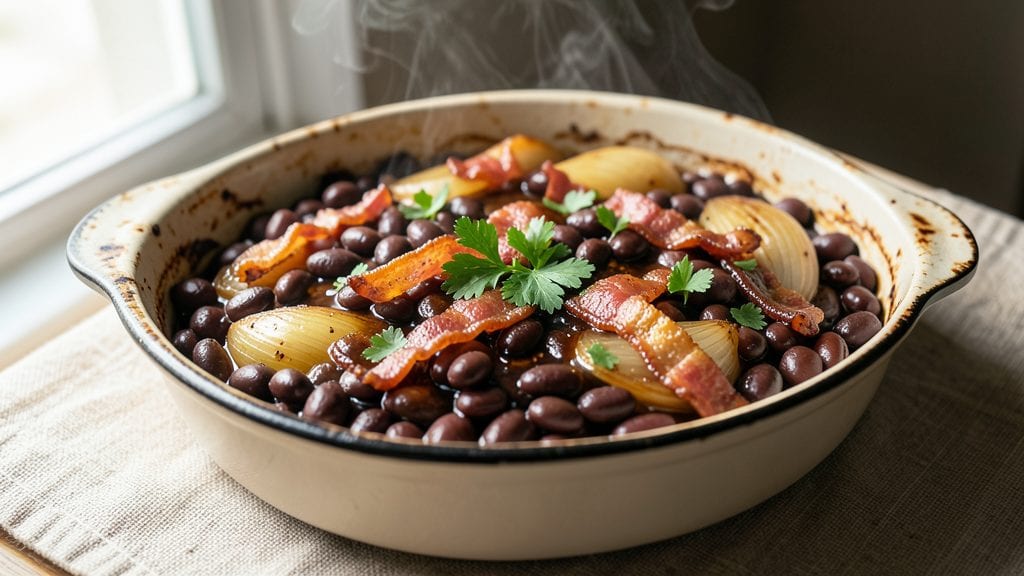
Grandma's baked bean recipe delivers that perfect balance of smoky, caramelized edges and creamy centers that make every bite unforgettable. The secret lies in slow baking with a touch of brown sugar and molasses, creating that signature crust while keeping the inside tender.
I first learned this version from my grandmother, who swore by the combination of bacon and onions for depth of flavor—it’s the foundation of any great baked bean dish.
This recipe transforms simple navy beans into a rich, hearty side that’s packed with smoky-sweet flavor from the brown sugar crust. The slow cooking process allows all the ingredients to meld together, creating a dish that’s both comforting and impressive.
What makes it special is how the flavors develop over time—starting with savory bacon and onions, then sweetening as the beans absorb the molasses and brown sugar.
By the time you pull it from the oven, you’ll have a deep, glossy crust that’s slightly crispy on top, with creamy, fall-apart beans underneath. The aroma alone will have everyone at the table asking what’s for dinner, and the taste?
Pure nostalgia in every spoonful. Serve it alongside grilled meats or cornbread for a meal that feels like a hug.
The beauty of this recipe is its versatility—it’s perfect for holidays, potlucks, or even a simple weeknight dinner. The slow cooking method means you can prep ahead and let the flavors deepen even more.
Whether you’re making it for a crowd or just a cozy family meal, this baked bean recipe is a classic that never goes out of style.
Ingredients for grandma's baked bean
Grandma's recipe brings together smoky bacon, sweet brown sugar crust, and creamy navy beans for unforgettable flavor.
| Ingredient | Amount | Notes |
|---|---|---|
| Navy Beans 🍲 | 2 cups | Dried, soaked overnight |
| Brown Sugar 🍬 | 1 cup | Packed, light or dark |
| Yellow Onions 🧅 | 1 whole | Medium size, diced small |
| Molasses 🍯 | ½ cup | Unsulphured preferred |
| Bacon 🥓 | 1 lb | Thick-cut, chopped small |
| Kosher Salt 🧂 | 1 ½ tsp | Adjust to taste |
| Black Pepper 🌶️ | ½ tsp | Freshly ground preferred |
| Garlic Cloves 🧄 | 4 cloves | Minced for depth |
| Mustard 🍯 | 1 tbsp | Dijon or yellow |
| Apple Cider Vinegar 🍎 | 1 tbsp | For tangy balance |
| Vegetable Oil 🫒 | 2 tbsp | For greasing baking dish |
| Bay Leaves 🌿 | 2 whole | For aromatic depth |
| Hot Sauce 🔥 | 1 tbsp | Optional, for heat |
| Ground Black Pepper 🌶️ | ¼ tsp | Freshly cracked |
| Water 💧 | 6 cups | For soaking beans |
The bacon is non-negotiable here—thick-cut pieces render beautifully and add that signature smoky depth. Costco or Trader Joe's often carry the best quality for this purpose. Look for cuts with good marbling, as that fat is what creates the rich, caramelized crust. The navy beans should be dried, not canned, for that authentic texture. Soak them overnight in plenty of water (at least 6 cups for 2 cups beans) with a pinch of salt to soften them properly. For the brown sugar, Domino is a reliable brand that works perfectly for this crust—just pack it tightly into the measuring cup for accurate measurements. The molasses needs to be unsulphured; Goya is a trusted brand that delivers that deep, rich flavor without bitterness.
No thick-cut bacon? Regular bacon chopped into small pieces works in a pinch, though it won't render as beautifully. Running short on molasses? Maple syrup at half the amount gives a similar sweetness, though the flavor profile shifts slightly. The onions can be swapped for shallots or leeks if you prefer a milder taste, but the sweetness of yellow onions is what balances the smokiness here. For the mustard, Dijon mustard adds a bit more complexity than yellow, but either works. If you're avoiding vinegar, lemon juice at the same amount provides the necessary acidity. The bay leaves are essential—don't skip them, as they add that subtle aromatic depth that makes this dish truly special. For the hot sauce, Tabasco is a classic choice, but any mild chili sauce will do.
This recipe is all about patience—the longer it bakes, the deeper the flavors develop. Once assembled, cover with foil and bake for 2 hours before removing the foil for the final 30 minutes to create that perfect caramelized crust. The beans will keep in the fridge for 5-6 days in an airtight container, and they actually taste better the next day as the flavors meld. For meal prep, portion into individual containers—these reheat beautifully and make for quick lunches. The crust can be crisped up in a 350°F oven for 5-10 minutes if you want to serve it with that perfect crunch. Freeze for up to 3 months by wrapping tightly in foil.
Why You'll Love This Recipe
- One-Pot Magic: I swear by this recipe—just toss everything into a Dutch oven, cover it, and let the oven do the work. No stirring, no fuss, no stress. That smoky molasses-bacon aroma alone makes it worth it.
- Sweet-Savory Balance: The brown sugar and molasses caramelize into something rich and deep, while the bacon adds a salty crunch that cuts through the sweetness. It’s like dessert and dinner had a baby, and I’m all in.
- Weeknight Workhorse: Between us, this is my go-to when I’ve got a house full of people and zero energy. Serve it with cornbread for brunch, alongside burgers for a BBQ, or even on its own with crusty bread. It never lets me down.
- Budget-Friendly Pantry Hero: Navy beans and bacon stretch a long way, and I’ve made this recipe feed six for under $10. The best part? It tastes even better the next day—perfect for meal prep or when you’re too tired to cook. Honestly, it’s my secret weapon.
Step-by-step instructions for grandma's baked beans
Here's how to create that perfect balance of smoky, caramelized crust and velvety bean centers.
Prepare the Beans for Maximum Creaminess
Start by draining and rinsing the soaked navy beans thoroughly under cold water. This removes excess starch that can make your beans gummy. Transfer them to a large pot and cover with the 6 cups of fresh water. Bring to a boil over high heat, then immediately reduce to a simmer for 30 minutes. You want the beans to soften but not fully cook through—just tender enough that they'll finish cooking in the oven.
I like to taste-test at the 25-minute mark. The beans should be pliable but still hold their shape when pressed between fingers. Drain the beans, reserving 1 cup of the cooking liquid for later. This starchy water helps create that signature creamy texture. The beans should yield about 3 cups when drained—this is normal as they'll expand further during baking.
Cook the Bacon and Build the Flavor Base
In a large skillet, cook the chopped bacon over medium heat until crispy, about 8-10 minutes. Use a slotted spoon to transfer the bacon to paper towels to drain, leaving the rendered fat in the pan. This bacon fat becomes the flavor foundation for your beans. Pour off all but 2 tablespoons of the fat, leaving just enough to coat the bottom of the pan.
Add the diced yellow onions to the bacon fat and sauté for 5 minutes until softened and translucent. Stir in the minced garlic cloves and cook for another 30 seconds until fragrant. This step develops the aromatic base that will infuse through the beans during baking. Don't let the garlic burn—it should smell sweet and inviting, not bitter.
Combine All Ingredients for Perfect Texture
In a large mixing bowl, combine the cooked beans, crispy bacon, onion-garlic mixture, brown sugar, molasses, mustard, apple cider vinegar, and hot sauce. The mixture will look thick and almost dry at this stage. Using your hands, gently mix everything together until fully incorporated. This is where the magic happens—the sugar and molasses begin breaking down, creating that signature caramelized crust.
Add the 1.5 teaspoons of kosher salt, 0.5 teaspoon of black pepper, 0.25 teaspoon of ground black pepper, and the 2 whole bay leaves. Stir in the reserved 1 cup of bean cooking liquid—this helps create that creamy texture. The mixture should be moist but not soupy. If it's too dry, add 1-2 tablespoons of water to help bind everything together.
Assemble and Bake for Maximum Flavor Development
Grease a 9x13-inch baking dish thoroughly with the 2 tablespoons of vegetable oil. Spread the bean mixture evenly in the dish, pressing down gently with a spatula to ensure even contact with the hot baking surface. This helps create that coveted crispy crust on top. Cover the dish tightly with aluminum foil and bake at 350°F for 1 hour.
After the initial hour, remove the foil and increase the oven temperature to 375°F. Bake uncovered for another 30-45 minutes until the top forms a beautiful caramelized crust. You'll know it's ready when the edges are deep brown and the surface looks almost glassy. The beans should be tender but still hold their shape when pressed with a fork. If the crust develops too quickly, tent loosely with foil to prevent burning.
Rest and Serve for Perfect Creaminess
Remove the baked beans from the oven and let them rest for 10-15 minutes before serving. This resting period allows the flavors to meld and the juices to redistribute throughout the beans. The crust will firm up slightly as it cools, but it should still be tender enough to cut with a spoon. If you prefer a softer crust, serve immediately while still warm.
Garnish with additional chopped bacon if desired, but I find the beans already have enough flavor from the initial cooking. Serve with crusty bread or cornbread to soak up all that creamy goodness. The beans should be rich and smoky with a perfect balance of sweetness from the brown sugar and molasses, and a subtle tang from the vinegar. Each bite should deliver that creamy texture we're after, with just enough crispness from the caramelized crust.
Pro Tips For Making Grandma'S Baked Bean
- CRISP THE ONIONS FIRST: Don’t just chop the onions—sauté them in the bacon fat until they’re translucent and just starting to turn golden. I used to skip this step, thinking it was unnecessary, but those caramelized edges make the whole dish taste richer. Take the extra 5 minutes; your taste buds will notice.
- SOAK BEANS OVERNIGHT: Navy beans are tough little guys, and skipping the soak leads to gummy beans no matter how long you bake them. Toss them in water (about 4 cups per pound) and let them sit for at least 8 hours—or overnight if you’re like me and forget to start dinner until late. Drain and rinse right before cooking to get rid of any funky water.
- WATCH THE BROWN SUGAR: Too much brown sugar turns your beans into a sticky, cloying mess, while too little makes them taste flat. Start with about ½ cup per 2 pounds of beans, then taste as you go—you can always add more, but you can’t take it out. Stir it in when the beans are mostly tender so it dissolves smoothly.
- BAKE LOW AND SLOW: Grandma’s recipe isn’t a 350°F casserole—it’s a 275°F (or even 250°F) labor of love. The low heat lets the flavors meld without burning the molasses or sugar. Cover the dish with foil for the first hour to trap steam, then uncover to let the top caramelize. Patience here is everything.
Regional styles of grandma's baked bean
Southern U.S. Style
In the South, baked beans often take center stage at barbecues and family gatherings, where they’re slow-cooked with pork shoulder or smoked sausage instead of bacon. My grandmother’s version from Georgia uses 1 lb of pulled pork shoulder mixed into the beans during the final hour of baking.
The key is to shred the pork thinly and fold it in just before the crust forms—this keeps it tender and soaks up all the smoky-sweet sauce. 🔥
For an extra-rich twist, Southern cooks often add ½ cup of ketchup to the sauce mixture before baking. This adds a tangy depth that balances the molasses and brown sugar. Serve with cornbread and collard greens for a full Southern spread.
The longer these beans sit, the better they taste—this is a dish meant to be made ahead and enjoyed over days.
Midwest Sweet Crust
The Midwest takes baked beans to another level by cranking up the sweetness in the crust. In Iowa and Wisconsin, it’s common to see recipes with ½ cup of maple syrup replacing some of the molasses for a caramelized top that’s almost candied.
I’ve made this version with 1 cup of brown sugar plus ¼ cup maple syrup, and it creates a stunning glossy crust that’s irresistibly crispy. 🍯
Another Midwest tradition is adding diced apples or pears to the beans during the last 30 minutes of baking. The fruit adds a subtle tartness that cuts through the richness.
Pair these with a side of mashed potatoes or a hearty beef stew for a comforting meal. The apples caramelize beautifully, adding texture and a hint of autumnal flavor.
New England Smoky-Sweet
Up in New England, baked beans often incorporate smoked paprika or even a splash of bourbon for depth. My aunt’s recipe from Maine calls for 1 tablespoon of smoked paprika mixed into the brown sugar before baking.
This adds a subtle smokiness that pairs perfectly with the molasses. For an adult-friendly twist, add 2 tablespoons of bourbon along with the vinegar—it cooks off but leaves behind warm, vanilla-like notes. 🥃
New Englanders also love to serve these beans with roasted turkey or cornbread muffins. The crust here is often slightly thicker, almost like a topping, and it’s common to let the beans cool completely before slicing—this makes the crust easier to handle.
The beans keep well in the fridge for up to a week, making them perfect for holiday leftovers.
Texas-Style BBQ Beans
In Texas, baked beans are a must-have at BBQ joints, where they’re often served in cast-iron skillets straight from the oven. The Texas twist? Adding chopped jalapeños and chili powder to the sauce.
I like to stir in 1 tablespoon of chili powder and 2 chopped jalapeños during the last 15 minutes of baking for a spicy kick. Serve these with brisket or pulled pork for the ultimate Texas BBQ experience. 🌶️
For an extra-smoky flavor, Texas cooks sometimes use liquid smoke—just ½ teaspoon added to the molasses mixture. This enhances the natural smokiness without overpowering the sweetness.
The beans are often served with a side of white bread for dipping, and the crust is left extra crispy to contrast the tender beans underneath.
Nutrition facts
Frequently asked questions
Why do the beans need to soak overnight?
Soaking overnight reduces cooking time and prevents gummy texture. Navy beans contain natural sugars and starches that release during soaking, making them easier to digest and creating that signature creamy consistency. Skipping this step can leave your beans tough and undercooked, even after baking.
Can I substitute canned beans for dried?
Yes, but you'll need to adjust the cooking process. Use 3 cups of canned navy beans (drained and rinsed) and skip the soaking step. Add them directly to the baking dish after cooking the bacon and onions. The texture will be slightly softer, but the flavor remains rich and satisfying.
What's the secret to that perfect caramelized crust?
The crust comes from the combination of brown sugar, molasses, and slow baking. After the initial 1 hour covered, remove the foil and bake uncovered at 375°F until edges are deep brown. Pressing the mixture gently into the baking dish before baking ensures even contact with the hot surface.
How do I make these beans vegetarian?
Replace the bacon with 1 lb of smoked tofu or tempeh, chopped small. Sauté it in vegetable oil until crispy, then proceed with the recipe as written. For extra richness, add 1 tablespoon of liquid smoke to the molasses mixture. The flavor remains deep and satisfying!
Can I make this recipe in a slow cooker?
Combine all ingredients in your slow cooker and cook on low for 6-7 hours or high for 3-4 hours. For the crust, transfer to a baking dish and broil for 5-10 minutes at the end. The slow cooker method makes this even more convenient for busy days.